
A small home office can feel much easier to work in when shelving is planned around the desk instead of simply added wherever there is an empty wall. The right shelf layout can give you useful storage and display space while leaving the main work surface clear.
These small home office shelving ideas focus specifically on shelf placement, proportions, depth, accessibility, and how different layouts can work around a compact desk. The goal is not to add as many shelves as possible. It is to create a shelving arrangement that supports the way you actually use your workspace.
Affiliate Disclosure: Some links in this article may be affiliate links. If you make a purchase through one of these links, Buy Facto may earn a small commission at no extra cost to you. Our recommendations are based on practical usefulness, space-saving potential, and suitability for small home offices.
1. Small Home Office Shelving Ideas: Floating Shelves Above the Desk
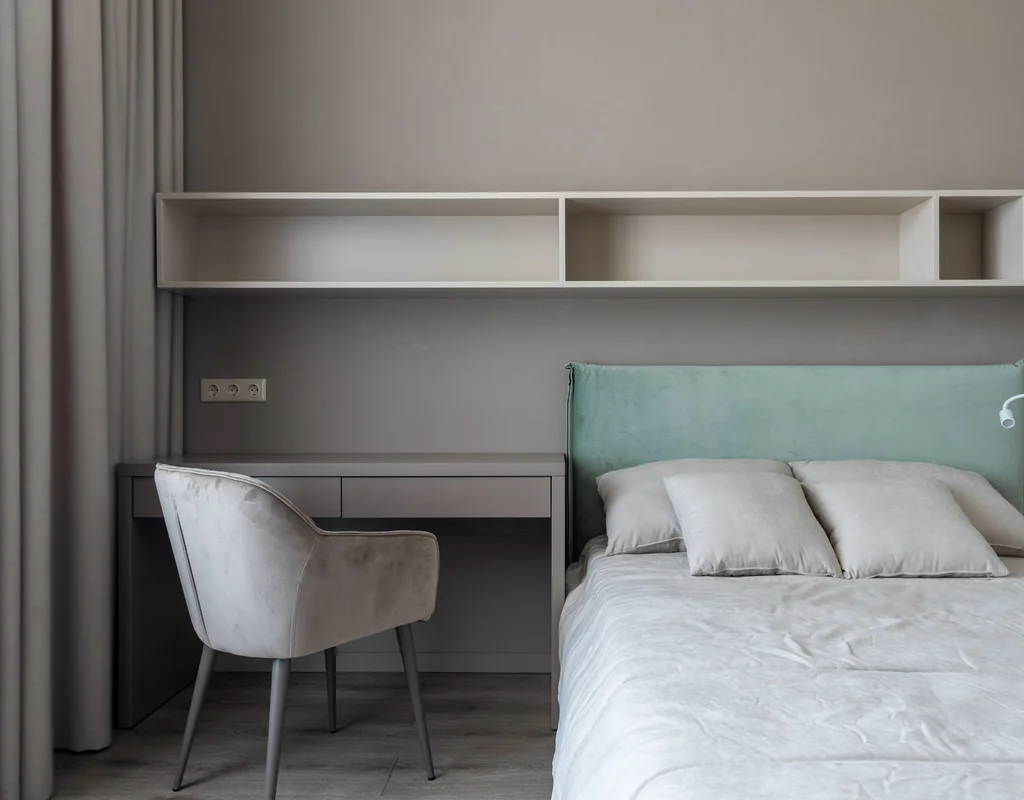
Floating shelves can make good use of the wall above a desk without adding furniture to the floor. This layout works particularly well when the desk sits against a clear wall and you need space for books, reference materials, or a few everyday items.
Before choosing the shelf length, measure the desk width and the available wall area. A shelf that extends far beyond a compact desk can make the arrangement feel unbalanced, while a very short shelf may not provide the space you need.
Consider these points before installation:
- Check the working height: Leave comfortable clearance above your head and workspace.
- Protect your screen area: Avoid placing shelves where they block your monitor, task lighting, or normal view.
- Measure the depth: Deeper shelves may provide more usable surface but can feel visually heavy above a small desk.
- Check the wall and fixings: Use mounting hardware suitable for the wall type and the expected load.
Try marking the intended shelf position with painter’s tape before drilling. Sit at your desk and check how the proposed layout feels from your normal working position.
Best for: Desks positioned against an open wall where floor space is limited.
Product recommendation: A simple floating shelf set can suit a compact desk when its dimensions and mounting system match your wall.
2. Use a Narrow Vertical Shelf Beside the Desk
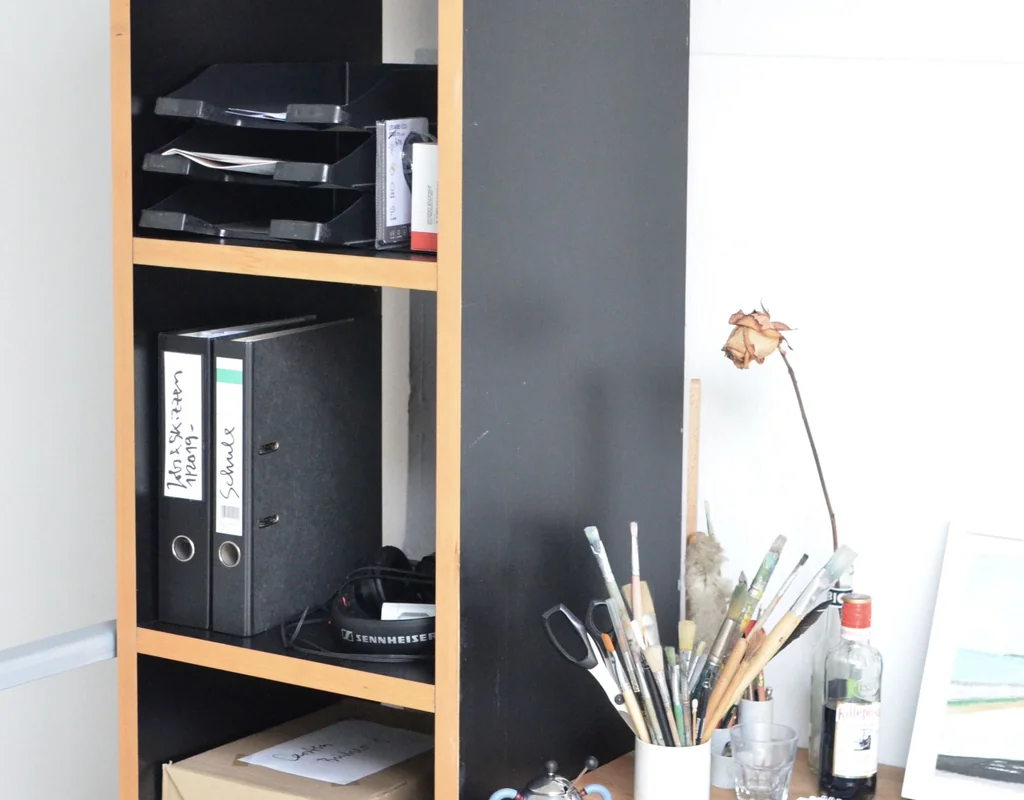
A narrow vertical shelf can make use of a small gap beside your desk without requiring a wider piece of furniture. This layout works best when the shelf fits naturally alongside the desk and does not interfere with your chair, drawers, or walking space.
Before choosing a shelf, measure the available gap carefully. Check both its width and depth, because a unit that fits between the desk and wall may still project too far into the room. Also consider whether you can comfortably reach the shelves while seated or standing.
For a more balanced arrangement, keep the shelf close enough to make useful materials accessible while leaving the main desk surface free for your everyday work. The top of the shelf does not necessarily need to line up with the desk; choose a height that works with the wall and surrounding furniture.
Before buying, check these details:
- Available width: Measure the narrowest part of the gap.
- Shelf depth: Make sure the unit will not obstruct your chair or walkway.
- Overall height: Check that the shelf suits the surrounding furniture and the items you plan to place on it.
- Stability: Follow the manufacturer’s instructions for safe placement and securing the unit where required.
- Access: Make sure nearby drawers, cupboard doors, outlets, and cables remain accessible.
The aim is to use the space beside the desk without making the working area feel cramped. If the gap is too narrow for comfortable access, consider another shelf position rather than forcing a unit into the space.
3. Make a Corner Work for You
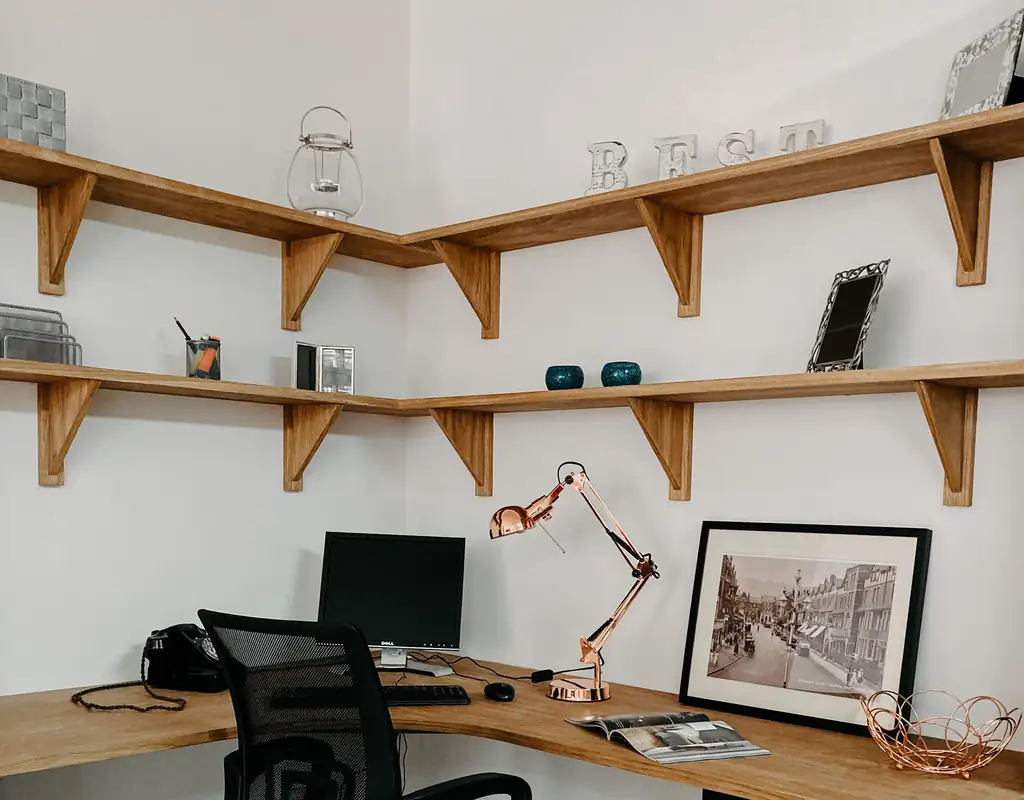
A corner shelf can be useful when the main wall above your desk is already occupied by a monitor, window, or other furniture. Rather than extending shelving across the entire wall, a corner arrangement can make use of a smaller area that might otherwise remain unused.
The best corner shelving layout depends on the shape of the room and the position of your desk. A shelf placed directly above a desk corner may keep frequently referenced items nearby, while a freestanding corner unit can work when there is enough floor space beside the workstation.
Before choosing a corner shelf, look at the available space from several angles. A unit that appears compact from the front may project farther into the room than expected.
Consider these points before installation:
- Measure both walls: Check the available width along each side of the corner.
- Check the shelf shape: A triangular shelf and an L-shaped shelf use corners differently, so choose one that fits the actual layout.
- Protect movement space: Make sure the shelf does not interfere with your chair, monitor position, or normal movement around the desk.
- Plan access: Place frequently used items where you can reach them comfortably without stretching.
- Check installation requirements: Use suitable mounting hardware and follow the manufacturer’s weight and safety instructions.
It can help to mark the shelf’s planned footprint with painter’s tape before buying or installing it. This gives you a clearer idea of how much room it will occupy and whether the arrangement feels balanced.
Keep the corner visually simple. The purpose is to make a small part of the room more functional, not to fill every available surface with objects.
4. Choose Shelves That Match Your Desk Size
Shelving should look proportionate to your desk and the wall around it. A long shelf above a narrow desk can make the arrangement feel unbalanced, while a very short shelf may look disconnected from a wider work surface.
Start by measuring the desk and the available wall area. Then decide what the shelf needs to accommodate. A shelf intended for a few reference books may need a different length and depth from one designed to hold a monitor accessory or display a small number of objects.
Use these measurements to plan a balanced layout:
- Desk width: Consider how the shelf will align with the desk rather than automatically choosing the longest option.
- Available wall width: Leave enough room around nearby windows, doors, lighting, and other wall features.
- Shelf depth: Choose enough depth for the intended items without creating unnecessary bulk above the workspace.
- Vertical clearance: Account for your monitor, lighting, and comfortable working position.
- Load requirements: Check the shelf’s rated capacity and the suitability of its mounting hardware.
You do not need to make every shelf line up perfectly with the desk. A shorter shelf positioned thoughtfully can work well, especially when the wall has a window or another feature that affects the available space.
Before purchasing, mark the proposed shelf dimensions on the wall with painter’s tape. View the layout while seated at your desk and from the entrance to the room. This simple check helps you judge the proportions before committing to installation.
The goal is a shelf that fits the space and serves a clear purpose, not simply the largest shelf that will fit.
5. Add a Dedicated Shelf for a Printer or Office Equipment
A small home office may need space for a printer, desk accessories, or equipment that does not need to remain on the main work surface. A dedicated shelf can help position these items without making the desk harder to use.
Before choosing this layout, consider the equipment’s dimensions and how it operates. A printer, for example, may need room for paper trays, an open scanner lid, cables, and access to controls. A shelf that fits the printer’s body but leaves no room to operate it may not be practical.
Use these checks when planning an equipment shelf:
- Measure the equipment: Include any parts that extend outward when the device is in use.
- Check the shelf’s load capacity: The shelf and its mounting system must safely support the equipment’s weight.
- Allow working clearance: Make sure paper trays, lids, and controls remain accessible.
- Plan cable access: Avoid positions that pinch cables or obstruct nearby outlets.
- Consider reach: Frequently used equipment should be convenient to access without forcing you to stretch or twist.
A separate shelf can be positioned beside the desk or on a suitable wall, depending on the available space. Keep heavier equipment on a stable surface and follow the manufacturer’s installation and ventilation requirements.
The goal is to give equipment a practical location without allowing it to take over the desk. Before installing a shelf, mark the proposed dimensions and test whether you can comfortably reach and operate the device.
6. Create a Balanced Layout With Open Shelves
Open shelving can help a small home office feel visually lighter, but the arrangement matters as much as the shelves themselves. A wall covered with shelves of different sizes can make a compact workspace feel crowded, even when the shelves provide useful space.
Instead of filling the entire wall, choose a clear arrangement that works with the desk, monitor, windows, and other features already in the room.
A few layout principles can help:
- Group shelves intentionally: Two shelves arranged along a shared line can create a calm, structured appearance.
- Leave breathing room: Keep some wall area empty instead of extending shelves across every available section.
- Work around the monitor: Avoid shelf positions that compete with the screen or interfere with comfortable viewing.
- Limit visual competition: If the desk already has several items on it, keep the shelves above it relatively simple.
- Repeat one finish where practical: Shelves with a consistent material or colour can help the workspace feel more coordinated.
You can also combine one or two open shelves with a small closed cabinet elsewhere if the room needs both display space and concealed storage. Keep the two elements visually connected through their finish, proportions, or placement.
Before installation, look at the wall as a whole rather than judging each shelf separately. A layout that feels balanced from your normal sitting position will generally be more comfortable than one designed only to fill empty wall space.
The aim is to make shelving feel like part of the workspace design, not an extra layer added after the room is already arranged.
7. Consider Adjustable Shelving for Changing Needs
Your workspace may change over time. You might add a second monitor, start keeping reference books nearby, or need a different place for office equipment. Adjustable shelving can make it easier to change the arrangement without planning an entirely new shelving layout.
Some systems use movable brackets and shelf tracks, while others have pre-set positions or modular components. The amount of flexibility depends on the design, so check how the shelves can be repositioned before buying.
Adjustable shelving can be useful when:
- Your equipment may change: New devices or accessories may require different shelf spacing.
- You use different-sized items: Books, folders, and equipment may need different amounts of vertical clearance.
- You want to avoid a fixed arrangement: Movable shelves can make it easier to adjust the layout when your work habits change.
- You are planning a long-term setup: A flexible system may continue to suit the workspace as your needs evolve.
Before choosing an adjustable system, check the available shelf positions, supported dimensions, weight limits, and installation requirements. Make sure the brackets and mounting hardware are suitable for the intended load, and follow the manufacturer’s instructions for securing the system.
Adjustability does not automatically make a shelf better. A fixed shelf can work perfectly well when its position and dimensions already suit your needs. Choose a flexible design when you expect the arrangement to change, rather than paying for features you are unlikely to use.
For a small home office, the most practical shelving setup is one that fits your current workspace while allowing reasonable adjustments when your needs change.
How High Should Shelves Be Above a Desk?
There is no single shelf height that works for every home office. The right position depends on your desk height, sitting position, monitor, lighting, shelf depth, and the items you plan to store.
Start by arranging your desk as you normally use it. Sit in your usual working position and check where your monitor, lamp, and other equipment sit. Shelves should provide useful access without making the area above the desk feel restrictive.
Before drilling holes, consider these factors:
- Monitor clearance: Make sure the shelf does not block the top of your screen or interfere with your normal viewing position.
- Comfortable reach: Place frequently used items where you can reach them without repeatedly stretching.
- Head clearance: Check that you can sit down, stand up, and move naturally without bumping into the shelf.
- Lighting: Avoid positions that block useful natural light or interfere with your task lamp.
- Shelf depth: Deeper shelves project farther into the room, so consider their position relative to your head and working area.
A simple way to test the placement is to mark the proposed shelf position on the wall with painter’s tape. Sit at the desk, look at the arrangement from different angles, and check whether you can access the intended items comfortably.
Also consider how the desk may be used in the future. A different monitor, desk lamp, or piece of equipment could affect the available clearance.
Measure carefully before installation and use mounting hardware suitable for your wall type and the expected load. Follow the shelf manufacturer’s installation and safety instructions.
The best shelf height is one that makes the workspace more useful without interfering with comfortable, everyday work.
Open Shelves vs. Closed Shelves for a Small Office
Open and closed shelving solve different problems in a small home office. Open shelves keep items visible and easy to reach, while closed shelving hides stored items behind doors or drawers. The better choice depends on what you need to store and how you want the workspace to look.
Open Shelves
Open shelves may suit your workspace when:
- You regularly use the items stored there.
- You want to keep reference books or work materials visible.
- You prefer a lighter, more open-looking wall arrangement.
- You need to see stored items quickly without opening doors.
The main trade-off is that everything remains visible. Items can make the workspace look busy if the shelf is crowded, so consider the appearance of the whole wall before adding more shelves.
Closed Shelves
Closed shelving may be more suitable when:
- You need to keep small supplies out of sight.
- You store items that do not need to be accessed throughout the day.
- You prefer a simpler-looking workspace.
- You need a combination of shelf space and enclosed compartments.
Closed units can add visual weight and may require additional clearance for doors or drawers. Check their dimensions and opening space before placing them beside a desk or in a narrow corner.
How to Choose Between Them
Start by considering the items you intend to keep on the shelves. Work materials you use regularly may be easier to access on open shelves. Items that you rarely need may be better placed behind a door.
You can also combine both styles. For example, open shelving can sit above the desk while a closed unit is placed elsewhere in the room, provided the arrangement fits the available space.
Before buying, measure the proposed location and consider access, shelf depth, stability, and the weight of the items you plan to store.
Choose shelving for the way you work, not just for its appearance. A suitable combination should make everyday tasks easier without making a small office feel crowded.
What to Look for Before Buying Home Office Shelving
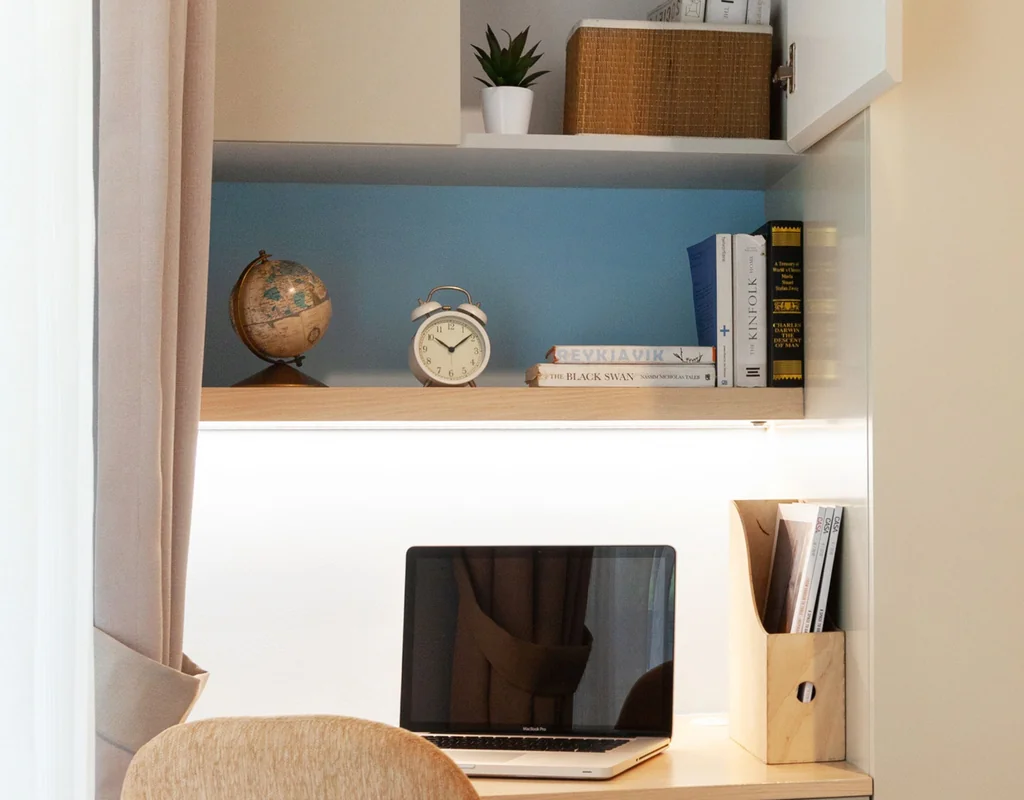
Before choosing shelving for a small home office, consider how the shelf is constructed, how it will be installed, and whether it will suit your work materials over time. Dimensions matter, but the shelf also needs to be practical for the items you plan to place on it.
Check the Load Rating
Look for the manufacturer’s stated weight capacity. Books, office equipment, and other heavy items can place more stress on a shelf than lightweight decorative objects.
Check whether the stated limit applies to the entire shelf or to each individual shelf. Distribute items according to the manufacturer’s guidance rather than assuming that every shelf can support the same load.
Confirm Wall and Mounting Compatibility
Wall-mounted shelving needs appropriate fixings for the wall construction. Hardware suitable for one wall type may not be suitable for another.
Read the installation instructions before buying, and check whether the required mounting hardware is included. If the wall construction or installation method is unclear, seek suitable professional advice rather than guessing.
Consider Shelf Spacing
Fixed shelves may work well when you know exactly what you plan to store. Adjustable shelves offer more flexibility if the sizes of your books, equipment, or other items change.
Check the usable space between shelves, not just the overall height of the unit. This helps you judge whether the intended items will fit comfortably.
Choose a Suitable Material and Finish
Shelves may be made from solid wood, engineered wood, metal, or a combination of materials. Each construction has different appearance, maintenance, and installation considerations.
Choose a finish that suits your desk and room, but also review the manufacturer’s guidance for cleaning and care. Appearance alone should not determine the purchase.
Think About Future Adjustments
Your workspace may change as you add or replace equipment. Consider whether the shelf arrangement can accommodate those changes without requiring a completely new installation.
Adjustable or modular designs can be useful when flexibility matters, while a simple fixed shelf may be more appropriate when your requirements are unlikely to change.
Review the Complete Product Information
Before ordering, check the product’s dimensions, rated capacity, installation requirements, included hardware, warranty terms, and return conditions. Confirm that the exact model or configuration matches the information in the listing.
A shelf that suits your actual requirements is more useful than one chosen only because it looks attractive or offers more space than you need.
Before You Install Shelves: Quick Checklist
Before buying or installing shelving, work through this checklist to make sure the layout suits your desk and room.
- Measure the available wall width and height.
- Measure shelf depth and check how far it will project into the room.
- Check clearance around your monitor, desk lamp, chair, and drawers.
- Decide which items the shelves need to support.
- Check the manufacturer’s shelf capacity and mounting instructions.
- Confirm that the fixings are suitable for your wall type.
- Check shelf spacing against the dimensions of your intended items.
- Keep frequently used shelves within comfortable reach.
- Make sure shelves do not block windows, lighting, outlets, or walkways.
- Mark the proposed shelf positions before drilling.
- Review the finished arrangement from your normal sitting position.
- Leave enough open wall space to keep the workspace visually balanced.
A few minutes of measuring and planning can help you avoid shelves that are inconvenient, incorrectly positioned, or unsuitable for the items you intend to place on them.
Frequently Asked Questions
Are Floating Shelves Good for a Small Home Office?
Yes. Floating shelves can provide useful wall space without adding another piece of furniture to the floor. They work particularly well above a desk when there is enough clearance for the monitor, lighting, and normal working position.
Check the shelf’s rated capacity and use mounting hardware suitable for your wall. Do not assume that every floating shelf can safely hold heavy books or office equipment.
How Do I Choose the Right Shelf Depth?
Start with the items you intend to place on the shelf. Books, small accessories, and lightweight decorative objects may need less depth than larger equipment.
Measure the available space and consider how far the shelf will project from the wall. Above a desk, avoid a depth that interferes with your head clearance, monitor, or lighting.
Can I Mix Different Shelf Layouts in One Small Office?
Yes, provided the layouts work together. For example, a floating shelf above the desk and a narrow shelf beside it can serve different purposes without requiring a large amount of floor space.
Before installing both, check their proportions, access, and mounting requirements. Keep the arrangement practical rather than filling every available wall area.
How Can Shelving Help Keep My Desk Clear?
Well-positioned shelves can move selected items off the work surface while keeping them accessible. Choose the shelf position according to how often you use those items, and make sure the arrangement does not obstruct your normal working area.
For more ideas focused on the desk itself, see our Small Home Office Desk Organization Ideas guide.
Should I Choose Wall-Mounted or Freestanding Shelving?
Wall-mounted shelves can save floor space, but they require suitable wall fixings and careful installation. Freestanding shelving may offer more flexibility when drilling is not practical, although it takes up floor area and may need securing against tipping.
Measure the available space and review the manufacturer’s installation and safety guidance before choosing either option.
What If I Need Storage Beyond Shelving?
Shelves are only one part of organizing a compact workspace. If you also need ideas for drawers, under-desk space, filing, and other storage areas, explore our Small Home Office Storage Ideas guide.
Final Thoughts
The best small home office shelving ideas make a compact workspace more practical without filling every available wall with shelves. The right arrangement depends on your desk size, available wall space, the items you use regularly, and how comfortably you can reach them.
Floating shelves can work well above a desk, while staggered shelves offer flexibility around monitors and windows. Narrow vertical units and corner shelves can make use of specific gaps, and dedicated equipment shelves may help when a printer or other device needs a separate location.
Before buying or installing any shelving, measure the available space, check shelf depth and weight capacity, and make sure the mounting method is suitable for your wall. Marking the planned position before drilling can also help you judge the layout from your normal working position.
Rather than choosing the largest shelf or filling an entire wall, focus on an arrangement that suits your actual work habits. A few carefully positioned shelves can provide useful access while keeping the desk comfortable and the room visually balanced.
For more ideas and practical advice, explore our Small Home Office guides.
Pingback: 8 Small Home Office Storage Ideas for Better Organization