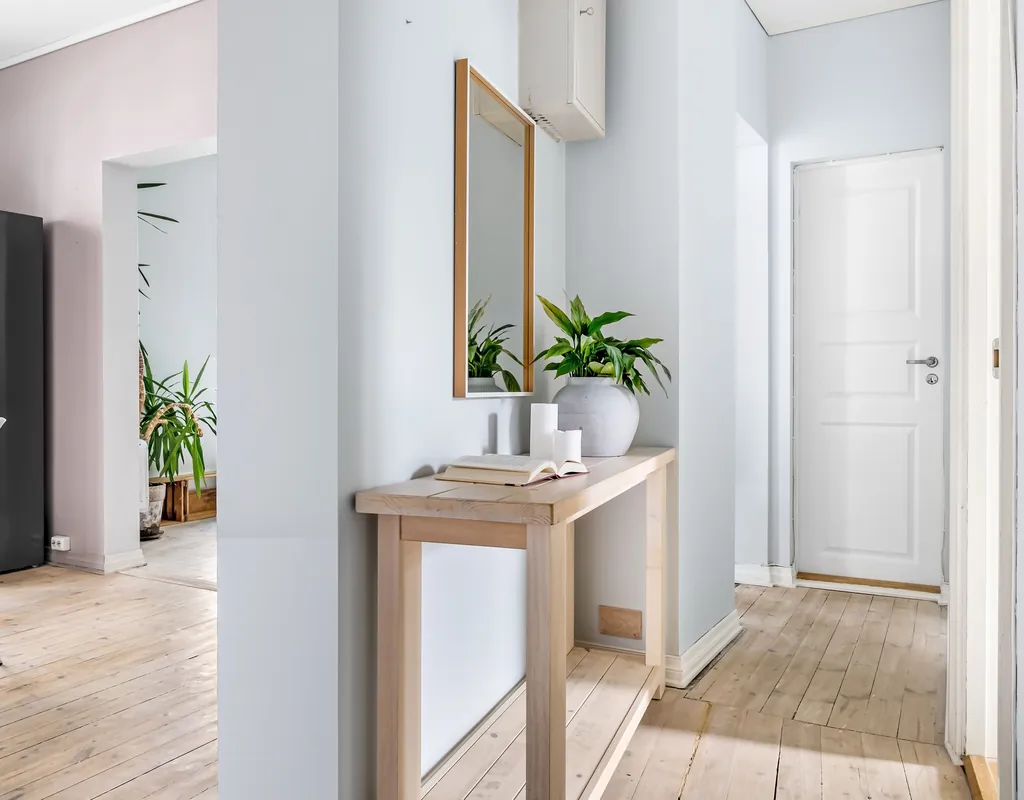
A narrow entryway rarely gets any real thought until it stops working. Shoes start piling up by the door, a coat ends up over the back of a chair instead of on a hook, and the one space everyone in the house passes through several times a day quietly turns into the most cluttered corner of the home.
None of that happens because the space is too small to organize. It happens because entryways are usually the last room anyone plans for — and the first one that shows it.
The narrowness itself makes the problem worse. A hallway that’s already tight starts to feel genuinely difficult to move through once a few pairs of shoes, a couple of bags, and a stray umbrella get added to it.
Fixing this doesn’t call for a renovation or an expensive furniture haul. Most of what actually helps is simple, and a fair amount of it costs very little.
If you’re also working on other compact areas of your home, our guide to How to Make a Small Living Room Feel Bigger covers similar ideas for the next room along.
1. Start With a Few Hooks — But Not Too Many
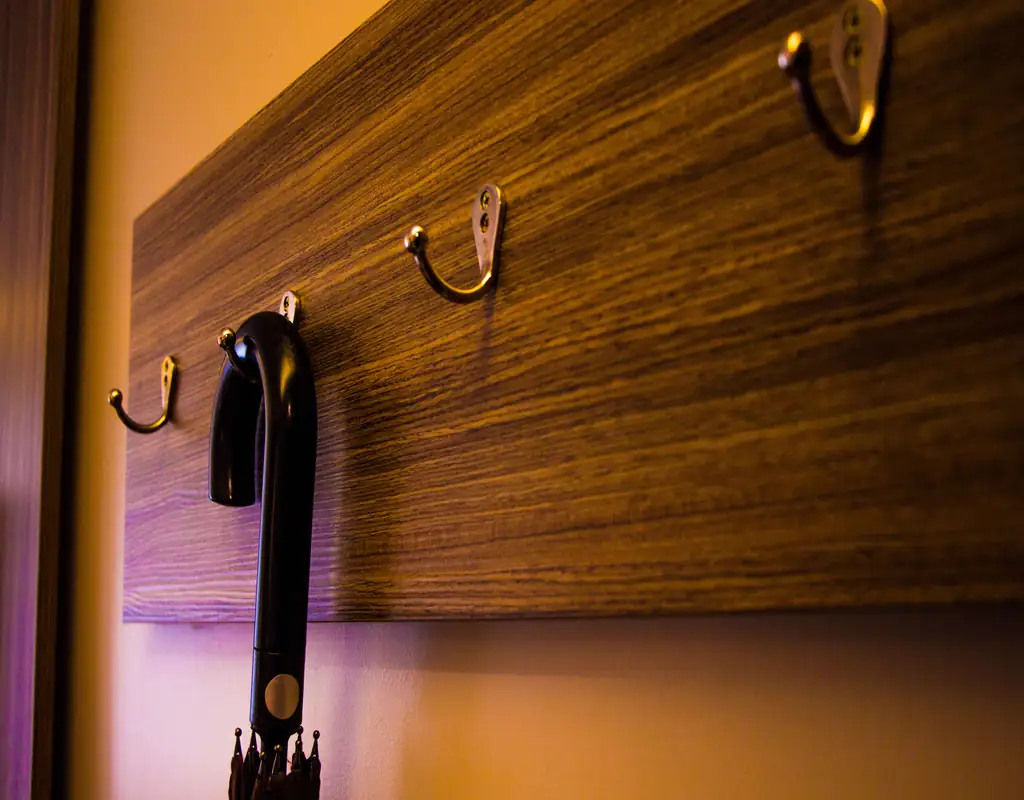
A set of wall hooks is usually the single most useful thing you can add to a small entryway.
A hook rail gives coats and bags a designated place to land, and a small tray or key holder keeps keys from disappearing into pockets or getting lost on random surfaces. Without something like this, things tend to end up on the floor, draped over furniture, or hung on the door handle — which works fine until the door needs to actually open.
It’s worth keeping the number of hooks modest. A rail with plenty of hooks sounds practical on paper, but in a narrow entryway, a fully loaded row can create a wall of visual clutter that makes the space feel more cramped than a bare wall would.
Two or three hooks — roughly one per person in the household — usually covers daily use. One extra for guests handles the occasional coat without turning the wall into a storage unit.
Height matters too. Mount the hooks somewhere that actually works for the people using them — too high and shorter family members can’t reach, too low and longer coats end up dragging on the floor.
2. Use the Floor Space Efficiently
Shoes are one of the biggest contributors to clutter in most small entryways.
Left loose, even two or three pairs can make a narrow hallway genuinely hard to walk through. The fix isn’t necessarily a large shoe rack — in a tight space, an oversized rack can end up taking more room than the loose shoes ever did.
A slim shoe cabinet against the wall, a small bench with storage underneath, or a simple two-tier rack by the door can contain footwear without dominating the floor.
The habit that matters most is limiting what stays near the door in the first place. Everyday shoes belong there. Seasonal boots, trainers you rarely wear, and spare pairs are usually better off stored somewhere else entirely. A small entryway works best when it holds only what actually gets used on a regular basis.
3. Add a Narrow Console Table
A console table gives you a surface for keys, post, and everyday essentials without eating much floor space.
Depth is the detail that matters most here. A console table around 25 to 30 centimetres deep (roughly 10 to 12 inches) sits close to the wall and keeps the walking area clear. Go deeper than that and the passable width of the hallway can narrow noticeably.
A table with a shelf underneath adds useful storage on top of the surface itself — a basket for gloves and scarves, a small tray for keys, or a couple of pairs of shoes tucked neatly out of the way.
If even a console table feels like too much for the space available, a floating shelf at a similar height does something comparable with almost no floor impact at all.
4. Put a Mirror on the Wall
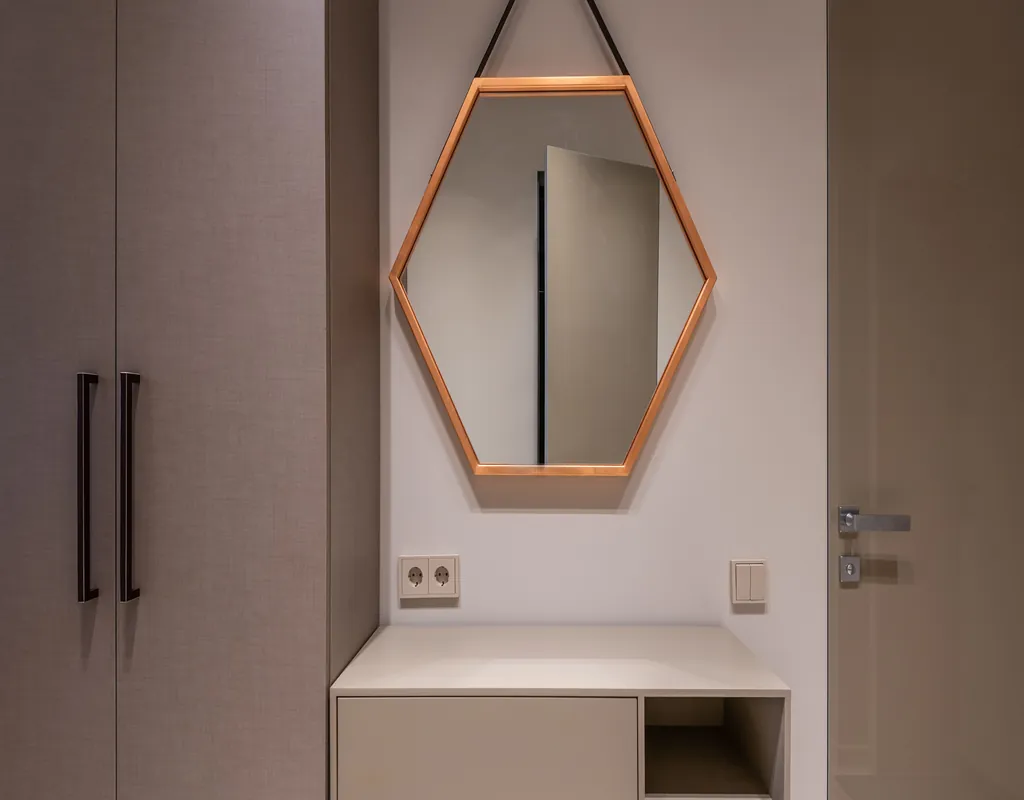
A mirror in a small entryway tends to do two jobs at once.
It can make the space feel larger by reflecting light and adding a sense of depth — the same principle that works in a compact living room, just applied to a narrower stretch of hallway.
It’s also genuinely useful right where it sits. Having a mirror by the door means you can check how you look on the way out without a detour back to the bedroom.
In a very narrow hallway, a tall slim mirror generally works better than a wide one. It pulls the eye upward, which can make the ceiling feel higher and the whole space feel less boxed in. A mirror that’s too wide for the wall tends to have the opposite effect.
Position matters, too. Placing it where it catches some natural light — facing a window, or a glass panel in the door — makes good use of whatever daylight is already available.
5. Think Vertically
When floor space runs out, the walls still have plenty of storage potential left in them.
In an entryway, using vertical space usually means going a bit higher than feels obvious at first. Hooks at standard height, a shelf just above them, and maybe another rail or hook higher still, can give a narrow wall considerably more capacity without pushing further into the walkway.
A pegboard can work well if the wall allows it — a section with a few hooks, a couple of small shelves, and a key holder brings together items that would otherwise be scattered across different surfaces.
One thing worth watching: a wall packed with objects at eye level can start to feel visually busy fast. Keeping the arrangement to things that actually serve a purpose, with some breathing room between them, tends to hold up better over time than filling every available spot.
6. Use the Back of the Door
The back of the entryway door is one of the most overlooked spots in the whole space.
An over-door organizer, a single hook, or a slim hanging rack adds real storage without using an inch of floor or wall space. It’s a natural home for umbrellas, reusable bags, a dog lead, or anything else that needs to be grabbable on the way out but doesn’t have an obvious spot near the door.
Before buying anything, check the clearance underneath — the organizer needs to clear the floor as the door swings open, and in a small entryway that gap is often smaller than it looks.
7. Keep the Color Scheme Light
A dark or heavily patterned entryway can feel oppressive in a narrow space, especially where natural light is already limited.
Light and neutral tones — white, off-white, soft gray, warm beige — reflect what light there is and help the space read as more open. Where the hallway connects to other rooms, choosing a color that carries through both spaces usually feels more cohesive than a sharp contrast right at the threshold.
That doesn’t mean the entryway has to look plain. A textured wallpaper in a neutral tone, a single piece of artwork, or a small plant on the console table can add character without adding visual weight.
8. Sort Out the Lighting
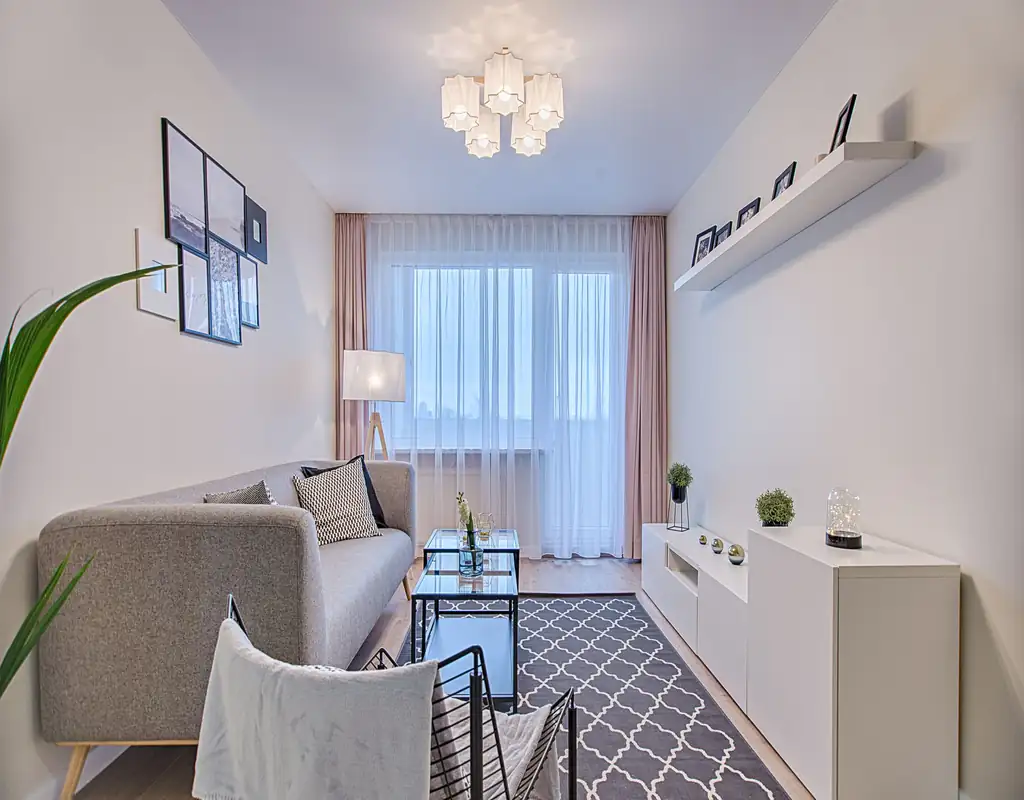
Plenty of smaller entryways run on a single overhead light and nothing else. In a narrow space, one ceiling fitting can leave the walls and lower areas sitting in shadow, which makes the hallway feel darker and more closed-in than it actually is.
A wall light, a small lamp on the console table, or any other low-profile light source adds warmth and balance without requiring much installation work at all.
Natural light is worth protecting, too. If the front door has a glass panel, or there’s a window near the entry, keeping furniture and heavy curtains from blocking it helps more than it might seem. Even a modest amount of daylight can make a narrow hallway feel noticeably more open.
9. Keep a Basket or Tray for Small Items
Keys, sunglasses, chargers, loose change, receipts — small items pile up near the door faster than almost anywhere else in the home.
A single basket or tray on the console table gives all of it a consistent home without needing an elaborate system. Everything that tends to collect near the door goes in the basket. That’s its only job.
The alternative — letting small items spread across whatever surface happens to be closest — leads to exactly the kind of low-level clutter that’s easy to overlook day to day but surprisingly effective at making a small space feel untidy.
10. Edit Regularly
The difference between a small entryway that works and one that doesn’t usually comes down to how much is being asked of it.
A narrow hallway can work well as a transition space — somewhere for a coat, shoes, and keys — but it tends to struggle when it’s also expected to double as secondary storage. Ask it to do both, and it often ends up doing neither particularly well.
Going through what’s currently sitting in the entryway and asking whether each item genuinely belongs there can make a real difference. Seasonal coats can move to a wardrobe. Shoes you rarely wear belong in a bedroom. Items that drifted near the door out of habit rather than intention can usually be relocated without any real inconvenience.
What’s left is what the entryway actually needs. A smaller set of items is considerably easier to keep organized than trying to manage everything at once.
What to Look for When Choosing Entryway Furniture
Depth
In a narrow hallway, depth matters more than width. A console table or shoe cabinet that extends too far from the wall can noticeably narrow the walkable space. Looking specifically for pieces described as slim or narrow tends to be more reliable than assuming a standard piece will fit comfortably.
Height
Taller pieces draw the eye upward and can make a low-ceilinged entryway feel more open. A tall slim mirror or a vertical shelving unit often works better in a narrow space than something wide and low.
Legs vs. Solid Base
Furniture with legs lets the floor stay visible underneath, which tends to make a space feel lighter and more open. A solid-base cabinet can offer similar storage but can feel heavier in a very small area.
Built-in Storage
Furniture that combines more than one function — a bench with shoe storage underneath, a console table with a lower shelf, a hook rail with a shelf above — is worth prioritizing in a compact entryway. If you’re making furniture choices across a small home more broadly, our guide to Multi-Functional Furniture Ideas for Small Apartments covers a range of options worth considering.
Simple Entryway Organization Ideas That Cost Very Little
Not every entryway improvement calls for new furniture.
A small basket from any homeware shop can hold the loose items that gather near the door. A few adhesive hooks can carry bags and coats without any drilling involved. A tray on a surface you already have gives keys and small items a consistent place to land.
Rearranging what’s already there — moving something that’s blocking light, clearing out items that don’t need to be in the entryway at all — often makes more of a difference than adding anything new.
Starting with whatever causes the most day-to-day frustration tends to work better than trying to fix the whole space at once.
Frequently Asked Questions
How do I make a small entryway look bigger?
Use light colors on the walls, add a mirror to reflect available light, keep the floor as clear as possible, and avoid overloading hooks and surfaces beyond what actually gets used day to day.
What furniture works best in a narrow hallway?
Slim console tables, narrow shoe cabinets, wall-mounted hooks, and floating shelves tend to work well because they add storage without extending far into the walkable space.
How do I organize shoes in a small entryway?
Limit the shoes near the door to the ones worn regularly. A slim two-tier rack or a bench with storage underneath can keep footwear contained without dominating the floor. Anything worn less often is better stored elsewhere.
Do I need a console table in my entryway?
Not necessarily. A floating shelf at a similar height achieves something comparable with less floor impact. What actually matters is having some surface near the door for keys and everyday essentials — the exact form depends on what the space allows.
What should I hang in a small entryway?
A mirror, a few hooks for coats and bags, and somewhere for keys usually covers it. Adding more than what’s regularly needed tends to make the space feel busier rather than better organized.
How many hooks do I need in an entryway?
One per regular user of the space, plus one for guests, is a reasonable starting point. Beyond that, extra hooks tend to add to the clutter rather than solve it.
Final Thoughts
A small entryway works best when it does one job well — providing a clear, functional transition between outside and inside.
That means a place for coats, somewhere for shoes, a surface for keys and small items, and enough light and space to feel welcoming rather than cramped. It doesn’t mean trying to store everything that might occasionally be needed near the door.
The improvements that actually move the needle tend to be about removing and simplifying rather than adding. Editing the hooks and surfaces down to what’s genuinely used, clearing the floor of what doesn’t belong there, and keeping the arrangement straightforward does more than most purchases ever will.
Once the basics are working, small additions — a mirror, a console table, better lighting — can improve the space further without undoing the simplicity that makes it function in the first place.
For more practical ideas on compact spaces, explore our Small-Space Solutions guides.