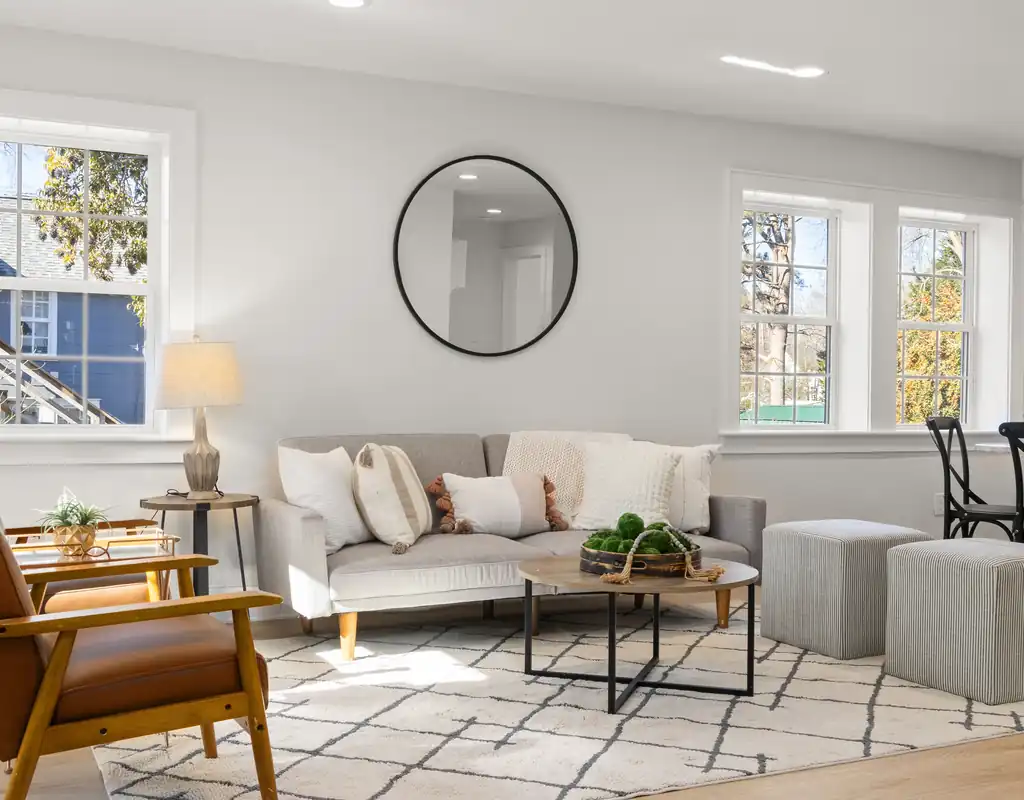
A small living room does not have to feel cramped. The right furniture, layout, lighting, and storage choices can make even a limited space feel more open and comfortable — often without spending much money or buying anything new.
In many cases, the way a room is arranged makes more difference than how much furniture it contains. A few targeted changes tend to do more than a full redesign.
If your living room also needs to pull double duty — as a workspace, guest room, or anything else — our guide to How to Organize a Small Room That Serves More Than One Purpose covers some useful ways to make one room work for different needs.
1. Choose Furniture That Actually Fits the Room
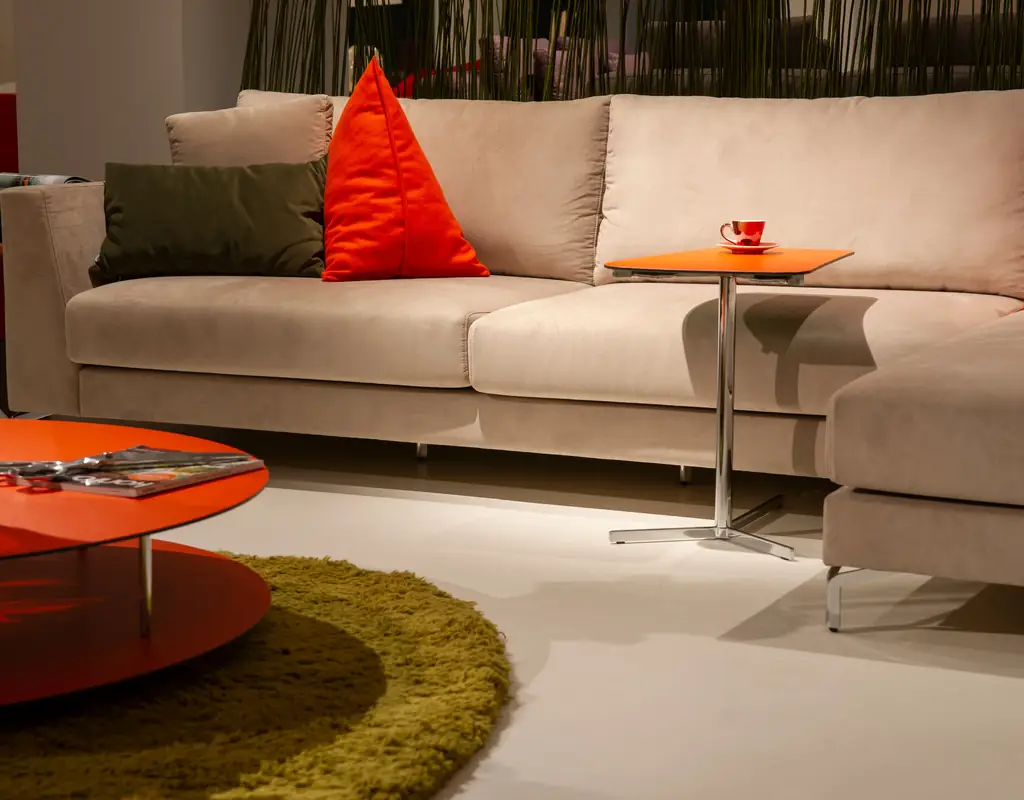
This is the most common reason a small living room feels cramped.
A large sofa looks perfectly reasonable in a showroom surrounded by high ceilings and open space. In a compact room, the same sofa can eat up most of the available floor and leave awkward gaps instead of usable space.
Before buying anything, measure the room properly — not just the wall, but the doorways, windows, walking areas, and any fixed features like radiators. Then compare those measurements against the furniture dimensions before you commit.
A compact sofa paired with a smaller coffee table can leave more visible floor space than a larger setup that technically fits but dominates the room visually. The goal is not to have the smallest furniture possible. It is to have furniture that is actually sized for the space you are working with.
2. Keep the Walking Areas Clear
Furniture placement matters more than most people expect.
A room can feel significantly smaller when you have to navigate around chairs or step sideways past a coffee table to reach the other side. Clear walking paths make a room feel more open, even when the amount of furniture stays exactly the same.
Try to identify the routes you naturally use — from the entrance to the seating area, from the seating area to the door — and keep those paths reasonably clear. Sometimes moving one chair a small distance is enough to make the whole room feel easier to move around.
3. Use Light Colors Thoughtfully
Lighter colors reflect more available light, which can make a room feel brighter and more open. Soft whites, warm neutrals, light gray, and similar shades tend to work well in compact spaces.
That does not mean everything has to be the same shade. Use a lighter base and add contrast through smaller pieces — cushions, artwork, a rug, a few plants. This gives the eye somewhere to land without creating visually heavy areas that make the room feel crowded.
If the room gets limited natural light, a lighter color scheme makes a noticeably bigger difference than it does in a brighter room.
4. Make the Most of Natural Light
A well-lit room almost always feels larger than the same room in poor light.
Keep curtains and blinds open during the day wherever possible. Try to avoid placing large furniture directly in front of windows. A sofa that blocks half a window reduces the available light for every hour of the day.
If privacy is a concern, lightweight curtains can let daylight in while still providing some coverage. The difference between heavy closed curtains and light open ones can be significant even in the same room.
5. Add a Mirror — One, Positioned Carefully
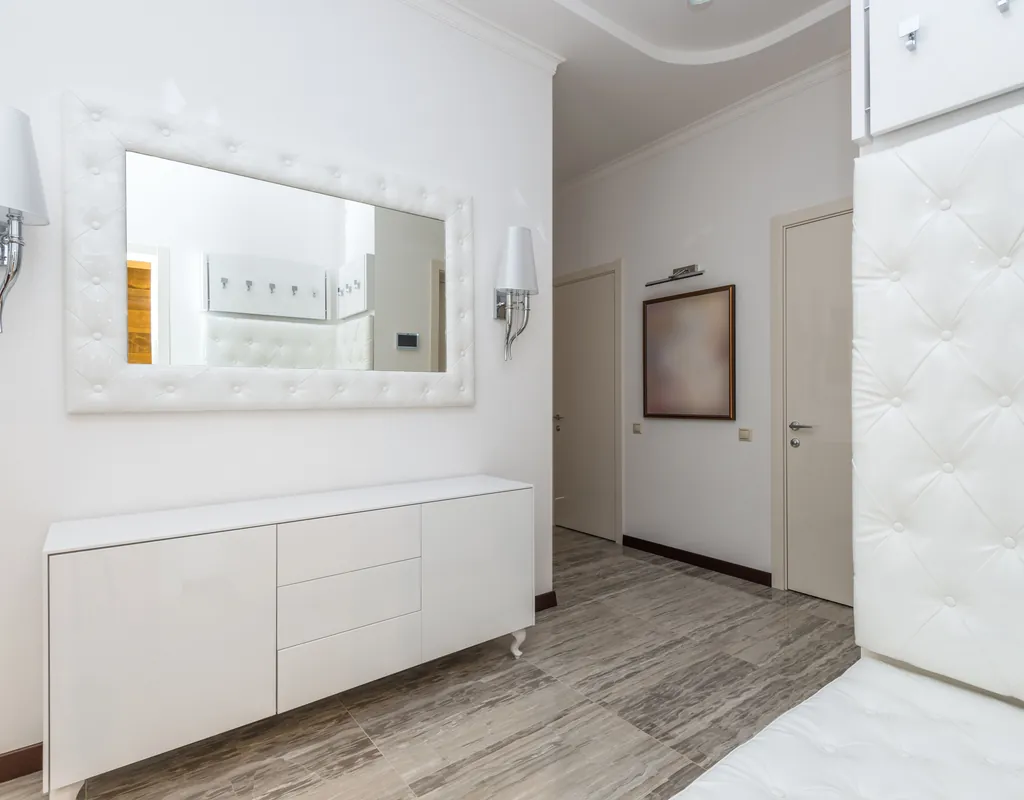
A well-placed mirror can make a room feel noticeably more spacious by reflecting light and parts of the room back toward you.
You do not need several large mirrors. One appropriately sized mirror in the right position is usually enough.
Before hanging it, consider what the mirror will reflect. A mirror facing a bright window or an open section of the room creates the impression of additional space. A mirror reflecting a cluttered corner does much less.
6. Keep the Floor as Visible as Possible
Visible floor space creates a sense of openness, even when the total floor area has not changed.
This does not mean removing rugs or avoiding furniture. It means being deliberate about how much floor each piece covers.
Furniture with raised legs can help — when you can see the floor underneath a sofa or armchair, the room feels lighter. A smaller coffee table leaves more space around the seating area. These are small decisions that add up in a compact room.
7. Choose Furniture That Does More Than One Job
In a small living room, every piece of furniture should be earning its place.
A storage ottoman serves as seating, a footrest, and hidden storage. A narrow side table provides a surface without the footprint of a larger one. A sofa with built-in storage underneath solves two problems with one purchase.
Before adding another piece of furniture, ask whether what you already have could do more. For more ideas on this, our guide to Multi-Functional Furniture Ideas for Small Apartments covers a range of practical options worth considering.
8. Use the Walls for Storage
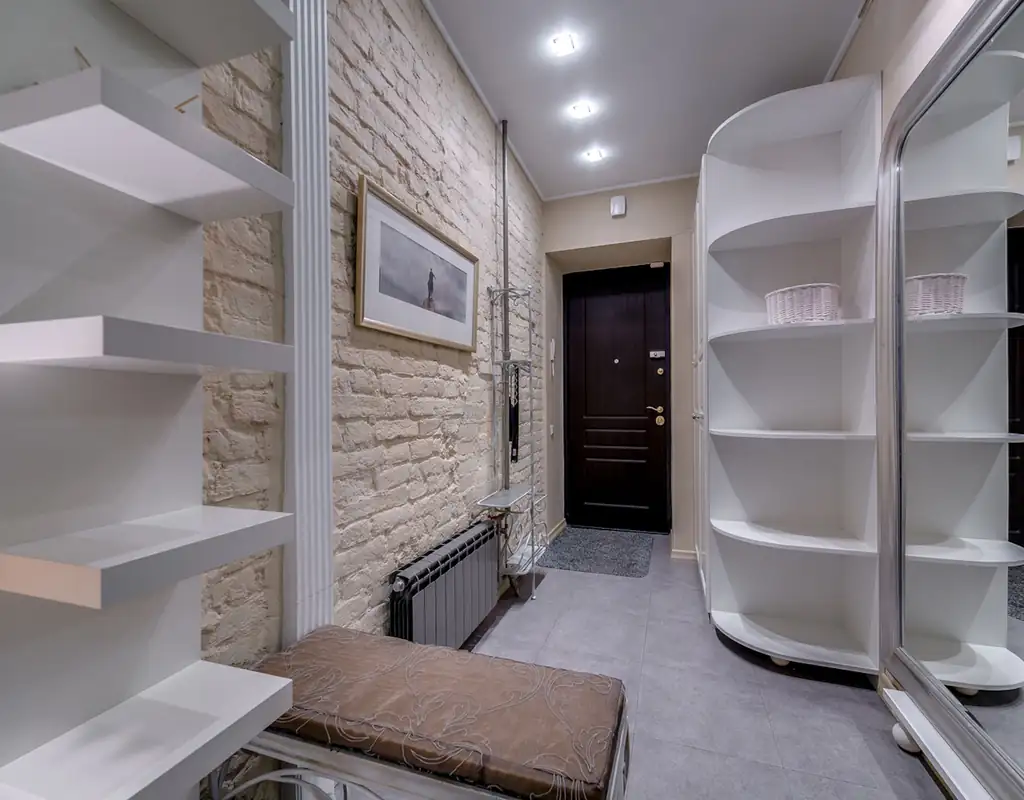
When floor space is limited, the walls can do a lot of the work.
Tall shelves, wall-mounted units, and vertical storage can hold significantly more than their floor footprint suggests. They also draw the eye upward, which can make the room feel taller.
Use vertical storage for things you actually need, and leave some wall space clear so the room has somewhere to breathe. A wall covered from end to end with shelves and decorations can feel as cluttered as a floor covered in furniture.
9. Keep the Main Surfaces Clear
A coffee table covered with remote controls, chargers, books, cups, and decorative objects can make a small room feel noticeably more cramped than it actually is.
You do not need to remove everything. A few carefully chosen objects on a surface add personality. The rest should have somewhere to go — a drawer, a basket, a cabinet, a storage ottoman — so it is not permanently on display simply because it has nowhere better to be.
10. Pick One Main Focal Point
A room where several things compete equally for attention can feel chaotic and crowded even when it is not especially full.
Choose one main feature to anchor the room around — a television, a fireplace, a large window, a piece of artwork — and arrange the furniture in relation to that. A room with a clear visual hierarchy tends to feel more organized and spacious, even when the amount of furniture is identical.
11. Be Careful With Patterns
Patterns add character, but multiple strong patterns in a small room can create visual noise that makes the space feel smaller.
If the sofa has a strong pattern, quieter curtains and cushions balance it out. If the rug is patterned, a simpler sofa keeps the room from feeling too busy. The goal is not to avoid all pattern — it is to give the eye a few calmer areas to rest between the more interesting ones.
12. Use Lighting at Different Levels
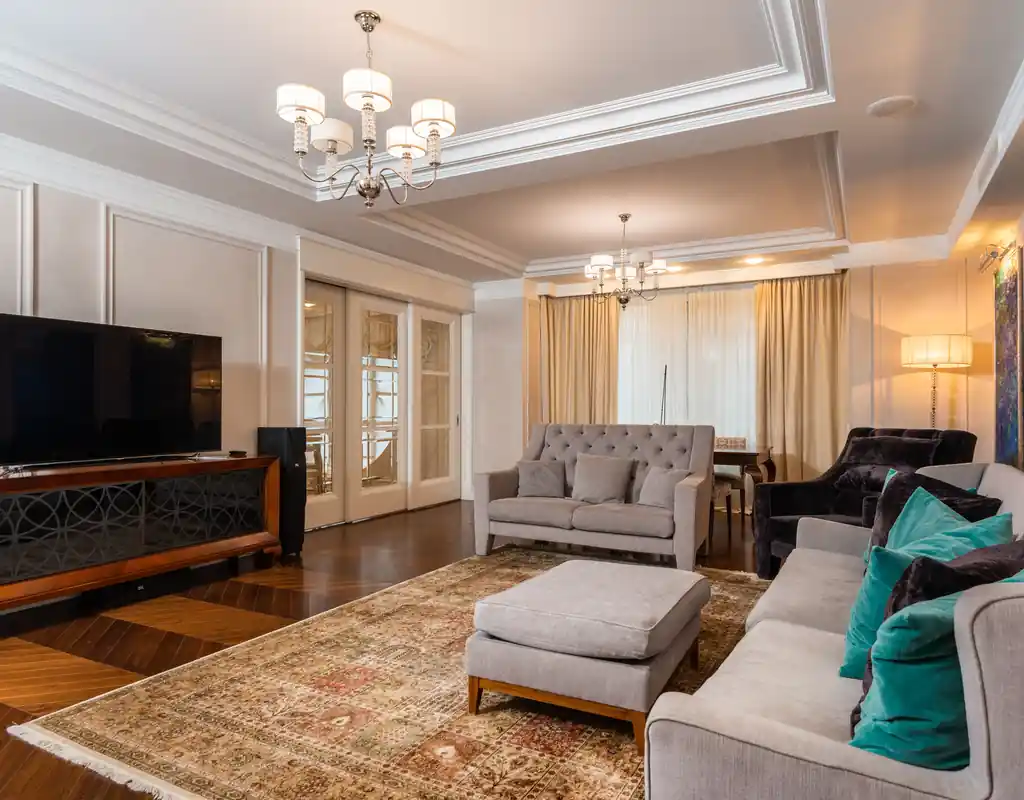
A single overhead light rarely makes a small room feel comfortable. It lights the room without particularly flattering it, and leaves the corners feeling darker by contrast.
A combination of different light sources — a floor lamp, a table lamp, some wall lighting — creates a more balanced effect. Adjustable lighting is particularly useful: brighter for reading or cleaning, softer for evenings.
If you are also sorting out lighting for a home workspace, our guide to Best Desk Lamps for Small Workspaces covers some practical options.
13. Leave Some Corners Empty
Empty space is useful too.
A small gap beside the sofa or an open section of wall gives the room visual breathing room. Without it, the eye moves from object to object with no place to rest, which makes the room feel more crowded than it is.
You do not need to fill a corner simply because it is there.
How to Arrange Furniture in a Small Living Room
Start with the largest piece — usually the sofa — and place it where it works with the room’s main focal point without blocking windows or natural walking paths.
Then add the coffee table and any secondary seating. Do not immediately fill every remaining space. Live with the arrangement for a day or two. Notice where you have to turn sideways or step around something. Those are the spots worth adjusting.
The best small living room layout is not the one that accommodates the most furniture. It is the one that lets you use the room comfortably without thinking about it.
What Furniture Works Best in a Small Living Room
Some features tend to help in compact spaces:
- Compact sofas that fit the room without dominating it
- Narrow side tables that provide a surface without the footprint
- Smaller coffee tables that leave more open space around the seating area
- Storage ottomans that handle seating and storage together
- Furniture with built-in storage
- Lightweight chairs that can be moved easily when needed
- Wall-mounted or vertical storage that uses wall space instead of floor space
Always measure before buying. Also check that the furniture can actually get through the door — larger pieces sometimes do not make it through narrow hallways even when they fit the room itself.
How to Make a Small Living Room Look More Spacious Without Buying Anything
Start by removing things you no longer use. Then look at the furniture arrangement. Move anything that blocks a window or sits directly in a walking path.
Clear the main surfaces down to the few things you actually want on display. Open the curtains fully and see how much difference natural light makes.
After that, look at one or two corners that feel particularly crowded and consider whether they need to be. Sometimes moving a single chair is enough to change how the whole room feels.
Common Mistakes That Make a Small Living Room Feel Smaller
Buying Furniture Without Measuring
Furniture looks different in a showroom surrounded by high ceilings. Measure your room, then measure the furniture, then decide.
Blocking Windows
Large furniture in front of a window reduces daylight for every hour it is there. Natural light is one of the most effective tools you have in a small room — do not block it.
Keeping Too Many Objects on Display
Visual clutter makes a room feel smaller faster than almost anything else. Use storage for things that do not need to be permanently visible.
Using Too Many Strong Colors and Patterns
A simpler palette gives the eye somewhere to rest. Balance stronger choices with quieter ones around them.
Ignoring How You Actually Move Through the Room
Design for how you use the space, not just how it looks. A room that is awkward to walk through does not work in practice regardless of how it appears.
A Simple Small Living Room Refresh
You do not need to change everything at once.
Start by removing anything you no longer use. Then rearrange the furniture to create a clear walking path. Open the curtains and check whether anything is blocking natural light.
Clear the main surfaces down to the things you genuinely want on display. If the room still feels crowded, look at whether your coffee table or secondary seating is taking up more space than it needs to.
Then consider small additions — a mirror, some adjusted lighting, a switch to lighter curtains. These tend to make more difference than buying new furniture and cost less.
Frequently Asked Questions
How can I make a small living room feel bigger?
Keep walking paths clear, choose furniture sized for the room, use natural light well, reduce visible clutter, and consider a carefully placed mirror. Light colors and multifunctional furniture can also help.
How do I make a small living room look bigger without buying new furniture?
Remove unnecessary items, rearrange the furniture to clear walking paths, open the curtains, and reduce surface clutter. Moving one or two pieces is often enough to change how the room feels.
What furniture is best for a small living room?
Furniture that fits the room comfortably and does more than one job where possible. Compact sofas, narrow tables, storage ottomans, and pieces with built-in storage tend to work well.
Does a mirror really make a small living room look bigger?
A well-positioned mirror can create the impression of more space by reflecting light and parts of the room. Its effect depends on where it is placed and what it reflects.
Should a small living room have a rug?
Yes, though the size matters. A rug that relates properly to the seating area tends to work better than one that is too small and makes the furniture arrangement look disconnected.
What colors make a small living room feel bigger?
Light and soft neutrals reflect more available light and create a more open feel. You can still use darker or brighter colors as accents through cushions, artwork, or smaller decorative pieces.
How should I arrange furniture in a small living room?
Start with the largest piece and work around the room’s main focal point. Leave comfortable walking paths and resist the urge to fill every available space.
Final Thoughts
Making a small living room feel bigger is usually less about adding the right things and more about removing the wrong ones and rearranging what is already there.
Start with the furniture size and arrangement. Create clear walking paths. Use natural light properly. Reduce visible clutter. Choose storage that keeps things out of sight without adding more bulk to the room.
If you do need to buy something new, look for pieces that do more than one job and fit the room rather than filling it. Our guide to Multi-Functional Furniture Ideas for Small Apartments is a useful starting point.
For more practical ideas for compact homes, explore our Small-Space Solutions guides. If you also need ideas for a compact home office, our Small Home Office section has more useful guides.