A whiteboard can give a small home office something that paper notes cannot: a reusable space that stays visible throughout the day.
You can use it for a short task list, project steps, meeting notes, reminders, calculations, or ideas that need to stay in sight for a while. Because the information can be erased and changed, the same surface can serve different purposes from one day to the next.
The problem is space.
A large office board may dominate a small wall, while a desktop board can reduce the working area you already have. Portable and foldable designs provide different ways to add writing space without committing to one permanent setup.
The best compact whiteboards for small home offices should therefore be judged by more than surface size. The useful details include the writing area, overall dimensions, mounting method, surface quality, portability, cleaning, and how much room remains around the board.
This guide compares five practical whiteboard formats and explains how to choose one for a compact workspace.
Affiliate Disclosure: Some links on Buy Facto may be affiliate links. If you purchase through one of these links, we may earn a commission at no additional cost to you.
Amazon Associates Disclosure: As an Amazon Associate I earn from qualifying purchases.
The product categories below are not based on our own laboratory testing. They are intended to help you compare features and specifications when shopping.
5 Best Compact Whiteboards for Small Home Offices
Different designs make sense in different small-office situations.
| Whiteboard Type | Useful For | Main Consideration |
|---|---|---|
| Compact wall-mounted whiteboard | Daily planning and reminders | Requires suitable wall space |
| Magnetic whiteboard | Notes plus attached papers | Magnetic strength can vary |
| Slim framed whiteboard | Permanent home-office setup | Less portable |
| Portable desktop whiteboard | Quick notes at the workstation | Uses desk space |
| Foldable or double-sided whiteboard | Larger temporary writing tasks | Needs more room when opened |
The right choice starts with where the board will be used and how much information you need to keep visible.
1. Compact Wall-Mounted Whiteboard

[Check Price — Compact Wall-Mounted Whiteboard]
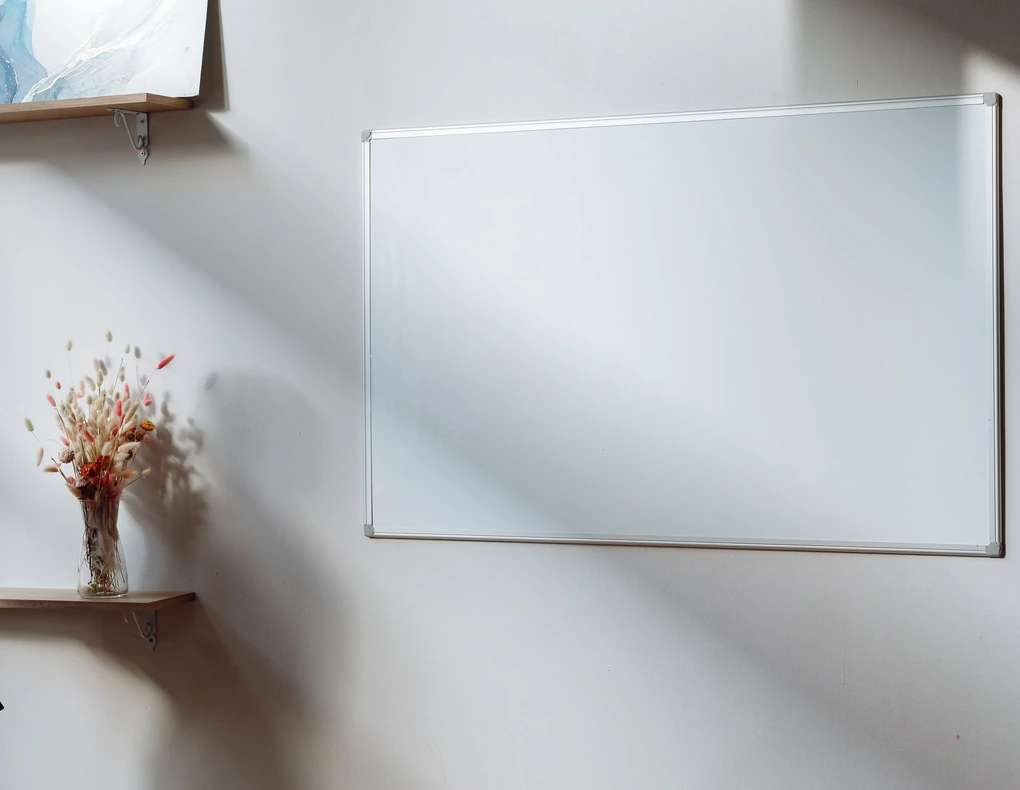
A wall-mounted whiteboard can be one of the most space-efficient choices for a small home office because the writing surface does not compete with your keyboard, mouse, monitor, or notebook.
Instead of adding another item to the desk, you use part of the wall for planning.
That makes this format useful for:
- Daily tasks
- Weekly planning
- Project stages
- Meeting notes
- Deadlines
- Quick calculations
- Brainstorming
Check the Wall Before Buying
The board dimensions are only part of the installation.
Consider:
- Available wall width
- Available wall height
- Mounting orientation
- Board weight
- Mounting hardware
- Writing height
- Nearby furniture
- Space needed for markers
A board can fit on paper but still be inconvenient if a shelf, cabinet, or other object blocks part of the writing surface.
The Main Advantage
A wall-mounted board protects valuable desk space.
This can be especially useful when your desk already has limited room for everyday work.
The Limitation
The board has a permanent location.
Once installed, moving it usually means changing the mounting position.
That makes wall mounting better suited to a workspace with a stable layout.
2. Compact Magnetic Whiteboard
[Check Price — Compact Magnetic Whiteboard]
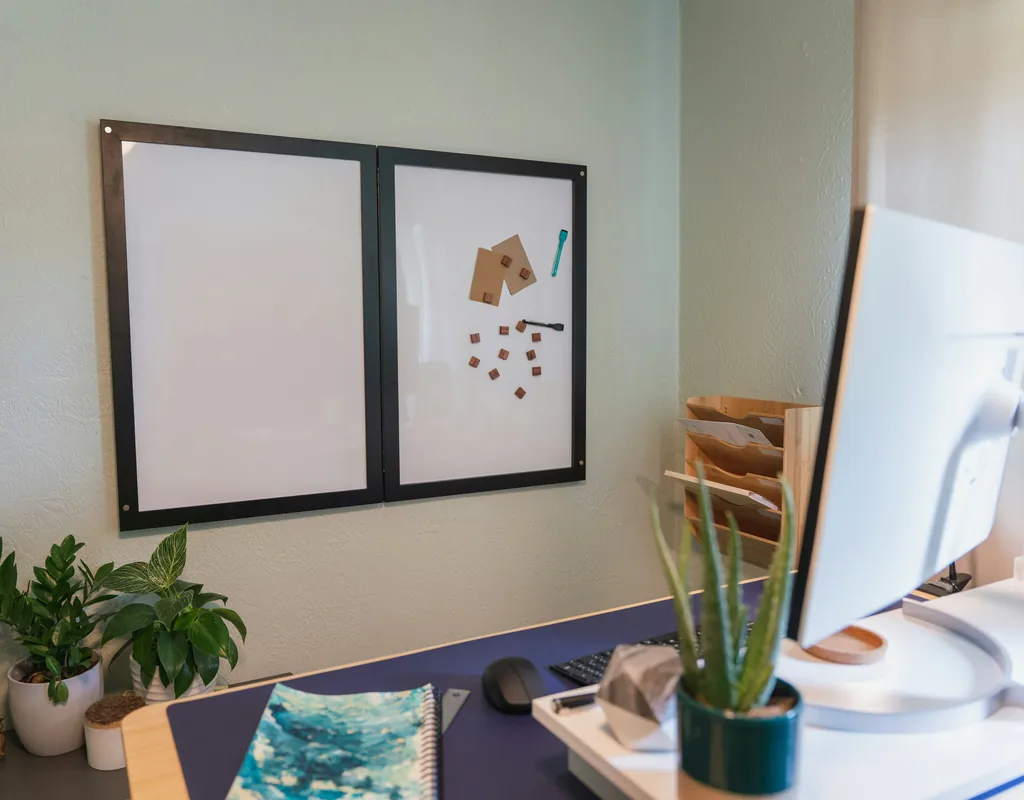
A magnetic whiteboard gives you two ways to use the surface.
You can write directly on it with suitable dry-erase markers and also attach compatible magnetic notes or papers.
That can be useful when some information changes frequently while other information only needs to be kept visible temporarily.
What You Could Attach
Depending on the board and magnets, you might keep:
- Short reminders
- Printed schedules
- Small reference sheets
- Temporary notes
- Project information
- Important dates
This means you do not have to rewrite everything manually.
What to Check
Before buying, look at:
- Whether the writing surface is magnetic
- Type of surface
- Frame construction
- Mounting system
- Included accessories
- Suitable magnet strength
Do not assume that every magnetic whiteboard has identical magnetic performance.
The board surface and the magnets both affect how well attached items stay in place.
Keep the Surface Under Control
A small magnetic board can become visually crowded if too many papers and notes are attached.
Use the magnetic area for information that actually needs to remain visible.
3. Slim Framed Whiteboard
[Check Price — Slim Framed Whiteboard]
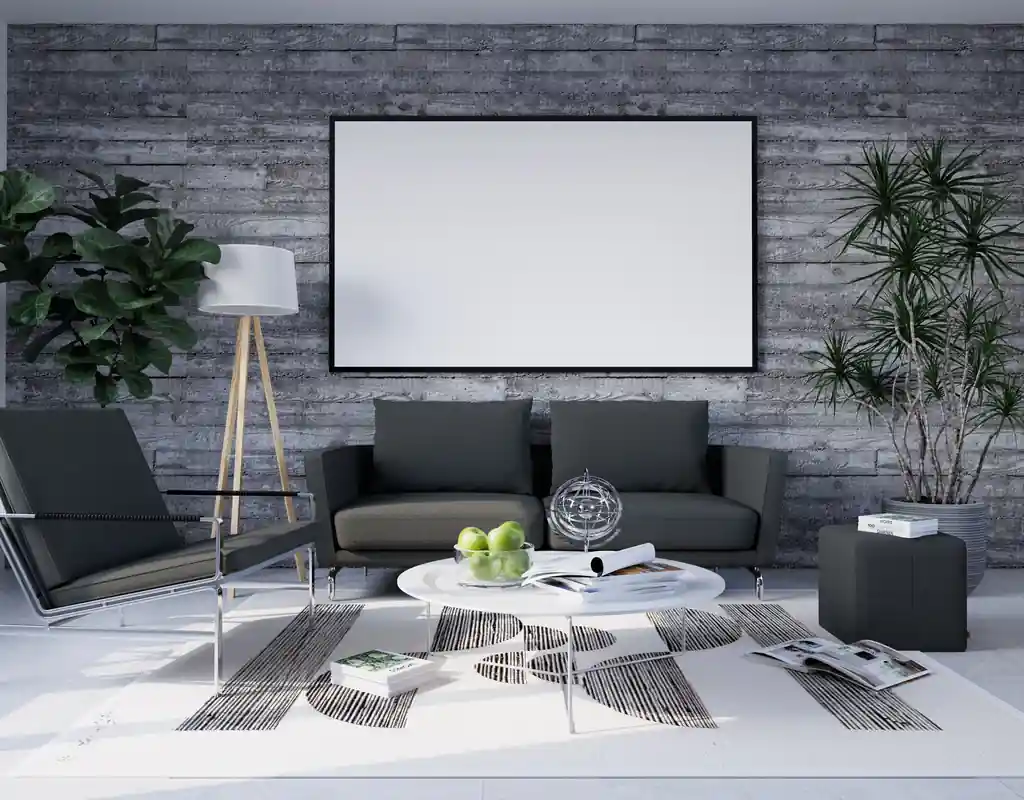
A slim framed whiteboard can suit a home office where you want the board to look integrated with the rest of the workspace.
The frame surrounds the usable writing area and can affect how much visual space the board appears to occupy.
For a room that also functions as a bedroom, living space, or another multipurpose area, a simple frame can help the board feel more natural within the room.
Compare the Usable Area
Do not judge a board by its outside dimensions alone.
Check:
- Total board size
- Actual writing area
- Frame width
- Corner construction
- Weight
- Mounting hardware
Two boards with similar outer dimensions can provide different amounts of usable writing space.
If the board will remain in one place for years, mounting quality deserves particular attention.
The Limitation
A slim framed board is generally a fixed solution.
If you regularly change work locations, a portable board may be more suitable.
4. Portable Desktop Whiteboard
[Check Price — Portable Desktop Whiteboard]
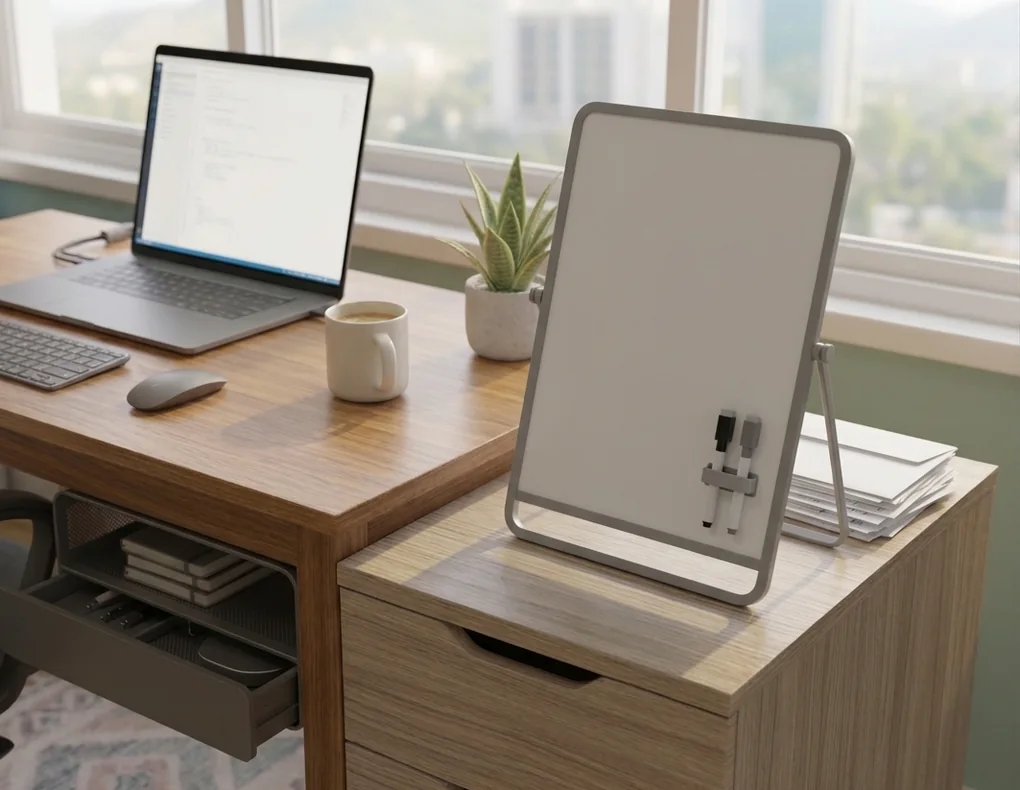
A desktop whiteboard puts the writing surface directly beside your normal workstation.
This can be useful when you want reminders or short notes within immediate view instead of mounted somewhere across the room.
Possible uses include:
- Daily priorities
- Meeting reminders
- Temporary calculations
- Short task lists
- Phone notes
- Project checkpoints
The Space Trade-Off
The main issue is obvious:
The whiteboard needs room on the desk.
Before buying, measure:
- Available width
- Available depth
- Stand footprint
- Board height
- Viewing angle
- Writing space
Make sure the board does not interfere with your keyboard, mouse, monitor, or normal arm movement.
If your desk is already difficult to manage, our Small Home Office Desk Organization Ideas guide has broader ideas for protecting usable desk space.
When It Makes Sense
A desktop board can be useful when the information needs to remain right beside you throughout the workday.
For a crowded desk, however, a wall-mounted option may make better use of the room.
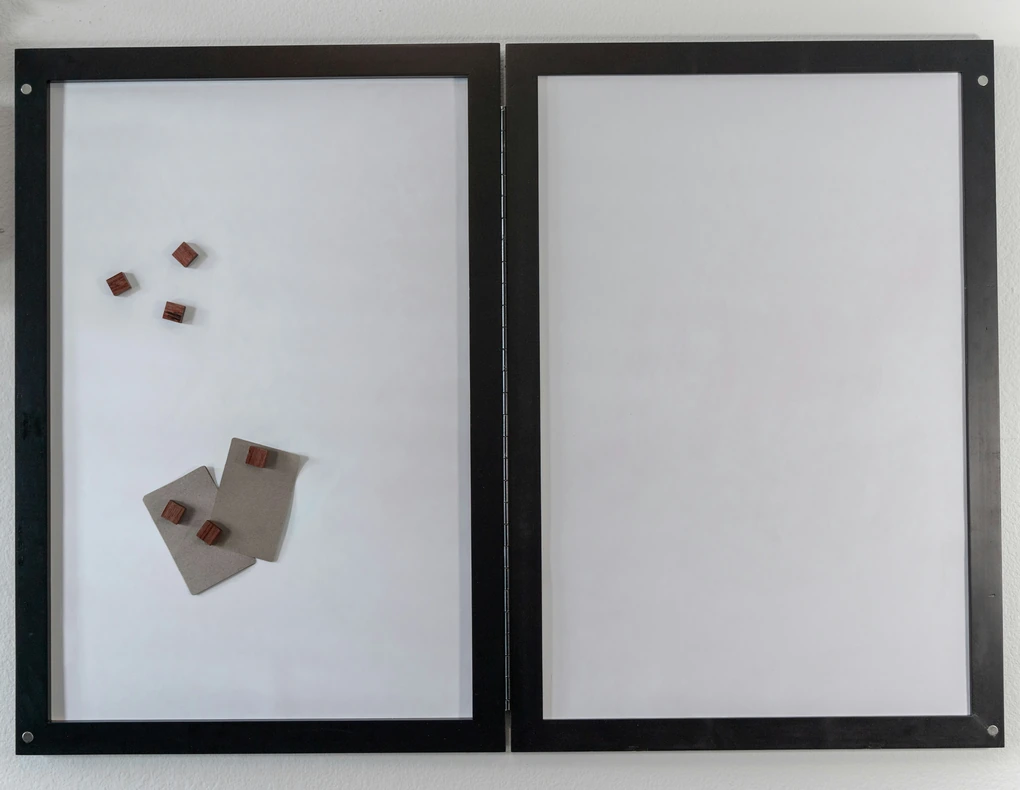
5. Foldable or Double-Sided Whiteboard
[Check Price — Foldable or Double-Sided Whiteboard]
A foldable or double-sided whiteboard can provide more writing area without requiring a large permanent surface.
A folding design may allow you to open additional panels when needed and close the board for storage afterward.
A double-sided design can also give you two writing surfaces within one product.
Where This Format Helps
This can be useful for:
- Larger projects
- Brainstorming
- Multiple task groups
- Study notes
- Temporary planning sessions
- Shared home-office use
For example, one side could hold a weekly plan while the other is used for project notes.
What to Measure
Check both the closed and open dimensions.
Also look at:
- Number of panels
- Hinge design
- Stability
- Surface quality
- Weight
- Storage requirements
A board that looks compact when folded may need considerably more space when fully opened.
The Limitation
More moving parts can make the product heavier or less convenient than a basic fixed board.
For a simple daily task list, a basic wall-mounted board may be enough.
How Much Writing Space Do You Need?
The largest board is not automatically the most useful one.
Think about the information that needs to remain visible.
A small writing area may be enough for a short daily task list.
A medium surface gives you room for weekly planning, project stages, and several categories.
A larger board can make sense when you regularly brainstorm or manage multiple projects.
The important thing is to balance writing area with the room available around the board.
A board that fills most of the wall may provide plenty of writing space while making the office feel unnecessarily crowded.
Wall-Mounted or Desktop?
This decision often comes down to what space you can afford to give up.
Wall-Mounted
A wall-mounted board can:
- Protect desk space
- Provide a larger writing area
- Stay visible throughout the day
- Work well for planning
The trade-off is that it requires a suitable installation location.
Desktop
A desktop board can:
- Stay close to your keyboard
- Be moved easily
- Avoid drilling
- Work well for short notes
The trade-off is that it uses part of the desk surface.
For a small office, measure the space first rather than choosing based only on appearance.
Does Magnetic Capability Matter?
Magnetic capability is helpful when you want to attach temporary information to the board.
For example, a printed schedule or small reference sheet can stay on the board without being rewritten.
But magnetic functionality is not essential.
If your main use is writing and erasing tasks, a standard dry-erase board may be enough.
Choose magnetic capability because you have a practical use for it, not simply because it appears on the product specification.
What Makes a Whiteboard Surface Good?
The surface has a direct effect on everyday use.
You want markers to write clearly and erase without leaving excessive residue.
Before buying, consider:
- Smooth writing
- Easy erasing
- Resistance to staining
- Surface durability
- Marker compatibility
- Cleaning instructions
A board intended for daily use deserves more attention to surface quality than one that will only be used occasionally.
Cleaning and Marker Storage
A whiteboard becomes less useful when old writing builds up and the surface becomes difficult to read.
Use appropriate dry-erase markers and follow the manufacturer’s cleaning instructions.
Do not assume that every household cleaner is suitable for every whiteboard surface.
Markers and erasers should also have a predictable storage location.
They might be kept in a tray, drawer, cabinet, or another nearby place.
For broader small-office storage ideas, see our 8 Small Home Office Storage Ideas to Keep Your Workspace Organized.
Where Should You Put a Whiteboard?
Placement affects both visibility and usability.
A practical location should be:
- Easy to see from your normal chair
- Comfortable to reach
- Free from furniture obstruction
- Well lit
- Large enough for normal writing movement
Before drilling into the wall, use removable tape to mark the board’s approximate dimensions.
Stand or sit where you normally work and check whether the board feels too high, too low, or too far away.
Also consider doors, cabinets, shelves, and other objects that may interfere with the board.
The best placement is the one that lets you use the entire writing surface without making the room harder to move around in.
For broader room-planning ideas, see our Small Home Office Layout Ideas.
Can a Whiteboard Replace Paper Notes?
For some tasks, yes.
A whiteboard works especially well for information that changes frequently.
A daily task list, for example, can be written in the morning and erased as the work is completed.
Paper can still be more useful when information needs to be saved, archived, or referred to months later.
There is no need to choose one or the other for every situation.
A small office can use a whiteboard for temporary information and paper or digital tools for records that need to be retained.
How to Keep a Small Whiteboard Useful
A whiteboard does not need to be filled with writing all day.
Leaving some empty space can make the important information easier to see.
One simple approach is to divide the board into a few clear areas:
Today
Current tasks and immediate reminders.
This Week
Items that do not need attention today.
Ideas
Notes that may be useful later.
You can change the layout as your workflow changes.
The board should support your work rather than become another place that needs constant maintenance.
Common Whiteboard Buying Mistakes
Choosing the Largest Board That Fits
A board may technically fit a wall while still making the room feel crowded.
Ignoring the Mounting System
The writing surface may be excellent, but poor installation hardware can make the board inconvenient to use.
Choosing a Desktop Board Without Measuring
A stand can consume more desk space than expected.
Focusing Only on Appearance
A visually appealing board is still a poor choice if the writing surface is difficult to clean or the mounting system does not suit your wall.
Forgetting the Surrounding Space
You need room to stand or sit comfortably while writing.
Buying More Features Than You Need
Magnetic surfaces, multiple panels, and extra accessories are useful only when they solve an actual problem.
Skipping the Cleaning Instructions
Different surfaces can have different maintenance requirements.
A Practical Buying Checklist
Before choosing a compact whiteboard, check:
- Overall dimensions
- Usable writing area
- Wall or desktop placement
- Mounting hardware
- Surface type
- Magnetic capability
- Frame size
- Weight
- Portability
- Folded and open dimensions if applicable
- Marker compatibility
- Cleaning requirements
- Accessory storage
- Product support
The aim is not to find the board with the longest list of features.
It is to find one that fits your space and the way you actually plan to use it.
FAQs
What is the best type of whiteboard for a small home office?
There is no single option for every workspace. Wall-mounted boards can preserve desk space, while desktop and portable models can work well when flexibility matters more.
Are compact whiteboards worth buying?
They can be useful for daily tasks, project planning, reminders, calculations, and ideas that change regularly.
Is a magnetic whiteboard better?
Not automatically. Magnetic capability is helpful when you want to attach temporary notes or papers, but a standard dry-erase board may be enough for simple planning.
What size whiteboard should I choose?
Choose a size that gives you enough writing area without making the room or desk feel crowded. Start with the amount of information you expect to display.
Is a wall-mounted whiteboard better than a desktop one?
It depends on your available space. Wall mounting protects desk space, while desktop boards are easier to move and install.
Are glass whiteboards suitable for small home offices?
They can provide a clean writing surface and a modern appearance, but they may be heavier or more expensive than other board types. Check the mounting requirements before buying.
How do I clean a whiteboard?
Use suitable dry-erase markers and follow the manufacturer’s cleaning instructions for the specific surface.
Can a whiteboard be used for project planning?
Yes. It can be useful for tasks, deadlines, project stages, brainstorming, and other information that changes over time.
Where should I mount a small whiteboard?
Choose a location that is easy to see and reach without furniture blocking the writing area. Measure the available wall space before installation.
Can a desktop whiteboard work on a small desk?
Yes, but measure the stand footprint and remaining work area first. A desktop board should not interfere with normal keyboard and mouse use.
Do whiteboards need special markers?
Most dry-erase boards are designed for dry-erase markers, but follow the manufacturer’s recommendations for the particular surface.
Final Thoughts
A compact whiteboard can add useful planning space to a small home office without requiring another stack of paper or a large piece of furniture.
A wall-mounted board can protect valuable desk space. Magnetic models add another way to display temporary information. Slim framed boards can suit a permanent setup, while desktop models keep notes close to your workstation. Foldable or double-sided designs can provide more writing area when a project requires it.
Before buying, focus on the details that matter in daily use:
usable writing area, overall dimensions, mounting method, surface quality, magnetic capability, portability, cleaning, and the space around the board.
You do not need the biggest board that fits your room.
You need a writing surface that is large enough for your work, easy enough to maintain, and compact enough to live comfortably in the space you already have.
For more practical small-workspace ideas, explore our Small Home Office guides.