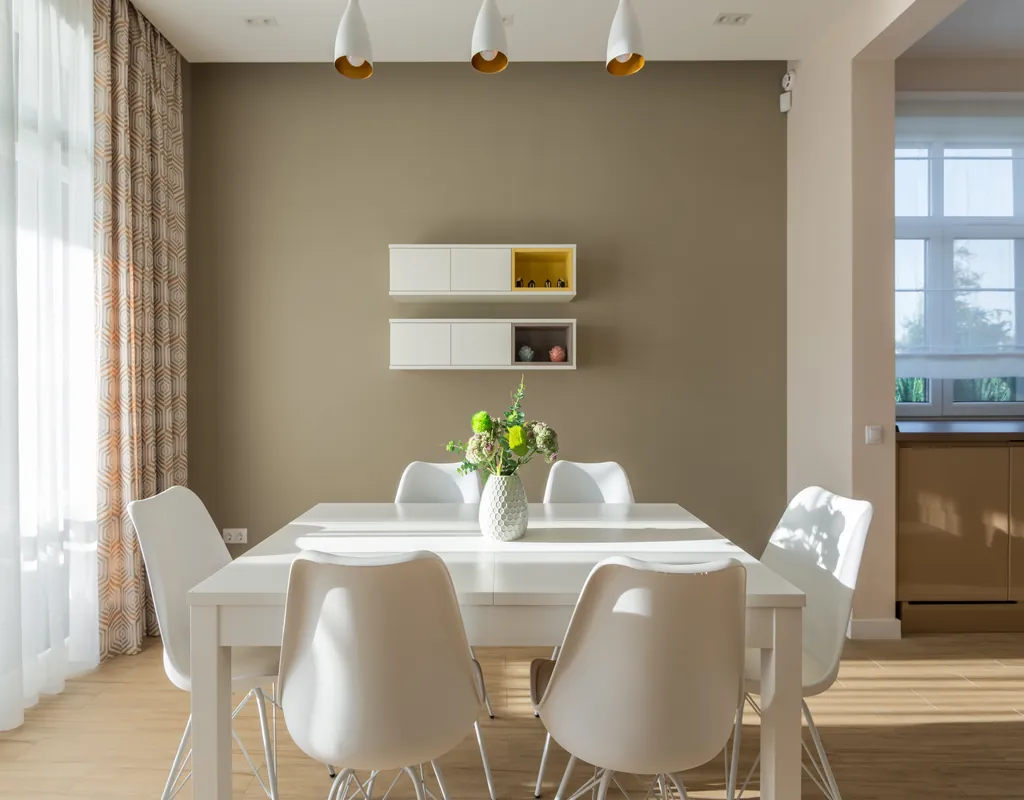
A small dining room has one straightforward job: give people somewhere comfortable to sit and eat. The difficulty is doing that in a space that often wasn’t designed with much extra room in mind.
The instinct is usually to look for more — a bigger table for guests, extra chairs for storage, a sideboard for the things that have nowhere else to go. In a small dining room, that instinct tends to backfire. The rooms that work best are usually the ones that hold less, arranged more deliberately.
None of this requires knocking down walls or replacing everything you own. Most of what actually changes how a small dining room feels comes down to a handful of decisions: the right table size, chairs that don’t dominate the space, light that makes the room feel larger than it is, and the discipline to leave some floor empty.
If you’re working on other compact rooms in your home, our guide to How to Make a Small Living Room Feel Bigger covers a lot of the same thinking applied to a different room.
1. Choose a Dining Table That Fits the Room — Not the Ideal
The dining table is almost always the largest object in the room, which means its size sets the tone for everything else.
A table sized for a larger room can leave so little space around it that pulling out a chair becomes an event. Before buying anything, measure what’s actually available — not just the room, but the clearance needed on each side for someone to sit comfortably and stand up without pushing into a wall or another piece of furniture.
A compact rectangular table works well in a narrow room. An extendable table is worth considering if you occasionally need to seat more people but don’t want the extra length permanently in the space. The goal isn’t the smallest table possible — it’s a table that handles everyday meals without taking over the room.
2. Consider a Round Table
A round dining table is worth thinking about seriously in a small dining room, particularly one with an awkward shape or limited floor space.
Without corners, a round table makes movement around the dining area easier. It can also make the seating arrangement feel more natural — everyone is positioned around the same center, which tends to work better for conversation than a long rectangular table where the people at each end might as well be in different rooms.
That said, a round table isn’t automatically better. A long narrow room often makes better use of its space with a slim rectangular table that runs along the length. Measure the room and think about how people will actually move around it before committing to a shape.
3. Choose Chairs With a Smaller Footprint
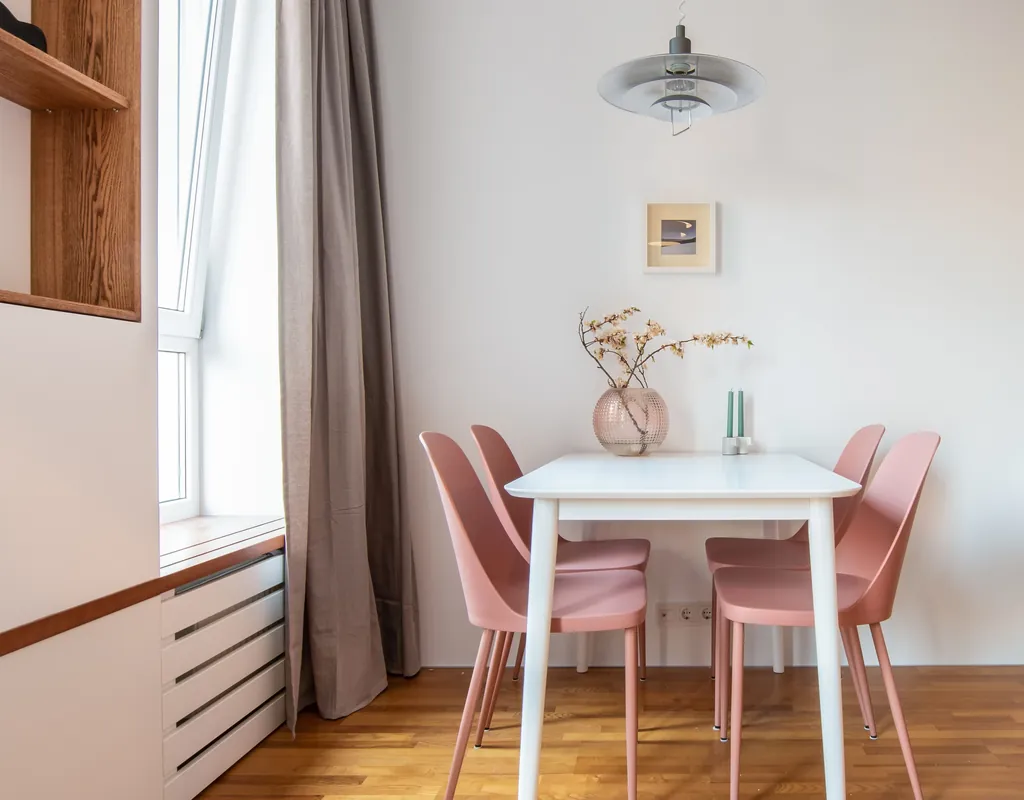
Dining chairs take up more room than they appear to, particularly when someone is actually sitting in them and the chair is pulled away from the table.
Wide chairs with thick cushions and armrests can make a compact dining area feel crowded even when the table itself is appropriately sized. Slimmer chairs that can be pushed fully underneath the table when not in use keep the floor looking clearer and make the room easier to move through.
Armless chairs are often a practical choice — they can usually sit closer together around the table and don’t need as much clearance on the sides when being pulled out.
A dining bench is another option worth considering. A bench can seat several people and typically slides fully underneath the table, freeing up almost the entire floor when the table isn’t in use.
4. Keep the Floor as Open as Possible
Visible floor space makes a small dining room feel less cramped, regardless of how the rest of the room is arranged.
A dining table and chairs may be all the room needs. If there’s already a sideboard, cabinet, or other piece of furniture that gets used infrequently, it’s worth asking whether it’s actually earning its floor space or simply filling a corner out of habit.
If your dining area also needs to serve another purpose — as a workspace, a homework area, or a place for other activities — our guide to How to Organize a Small Room That Serves More Than One Purpose covers ways to make one room work for different needs without making it feel like it’s doing none of them well.
5. Use Light Colors Without Making Everything Identical

Color has a real effect on how open a small room feels.
Light neutrals — soft white, cream, pale gray, warm beige — reflect more available light than darker shades and tend to make a room read as more spacious. Using similar tones across the larger surfaces removes the visual breaks that make a small room feel divided into even smaller sections.
That doesn’t mean the room has to be monotone. Natural wood, a muted accent color, a piece of artwork with some depth — these add character without working against the sense of space the lighter background is creating.
The balance to aim for is a room that feels personal without feeling visually crowded.
6. Add a Mirror in the Right Position
A well-placed mirror can make a compact dining room appear larger by creating a sense of depth and reflecting available light back into the space.
What the mirror reflects matters as much as whether there’s a mirror at all. One facing a window will reflect daylight and make the room feel noticeably brighter. One facing an attractive wall or a piece of artwork doubles that detail. One facing a cluttered corner makes the room feel busier, not more spacious.
A properly sized mirror can work as both a decorative piece and a practical visual tool — and it costs far less than most furniture changes.
7. Make the Most of Natural Light
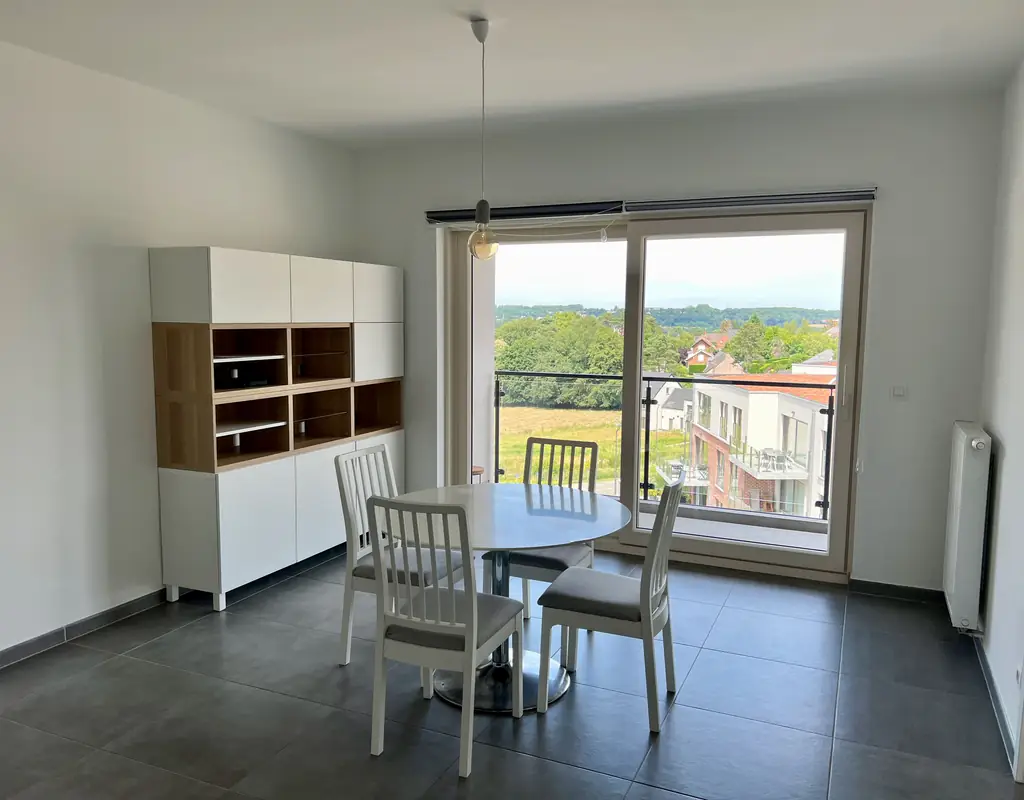
A dining room that gets good natural light almost always feels more open than the same room in poor light.
If there’s a window, keeping the area in front of it relatively clear allows daylight to do its job. Tall furniture placed against a window reduces available light for every hour it sits there.
Window treatments matter too. Heavy curtains kept half-closed block more daylight than most people realize. Lighter fabric, or simple blinds that can be opened fully during the day, maintains a brighter atmosphere without sacrificing privacy.
Small details like clean windows and unobstructed sills make more difference than they sound like they should.
8. Choose Lighting That Fits the Scale of the Room
Artificial lighting matters more when natural light is limited, and the scale of the fixture matters in a small room.
A pendant light above the dining table provides focused illumination and creates a clear visual anchor for the space. The fixture should be proportional — oversized pendants can make a compact room feel crowded, while something too small won’t provide enough light or presence.
Wall-mounted lights are worth considering as a supplement or alternative. They add light without using any table or floor space, which matters in a room where both are at a premium.
9. Use a Narrow Sideboard — or Skip It
A sideboard can provide useful storage, but it can also consume valuable floor space that the room doesn’t have to spare.
If one is genuinely needed, choosing a relatively narrow design and measuring the available wall space before buying avoids the common mistake of buying a piece that technically fits but leaves the chairs no room to pull out properly.
If storage isn’t a real need, leaving that wall clear is often a better choice. Empty wall space in a small dining room doesn’t look sparse — it looks considered.
10. Use the Walls for Storage and Display
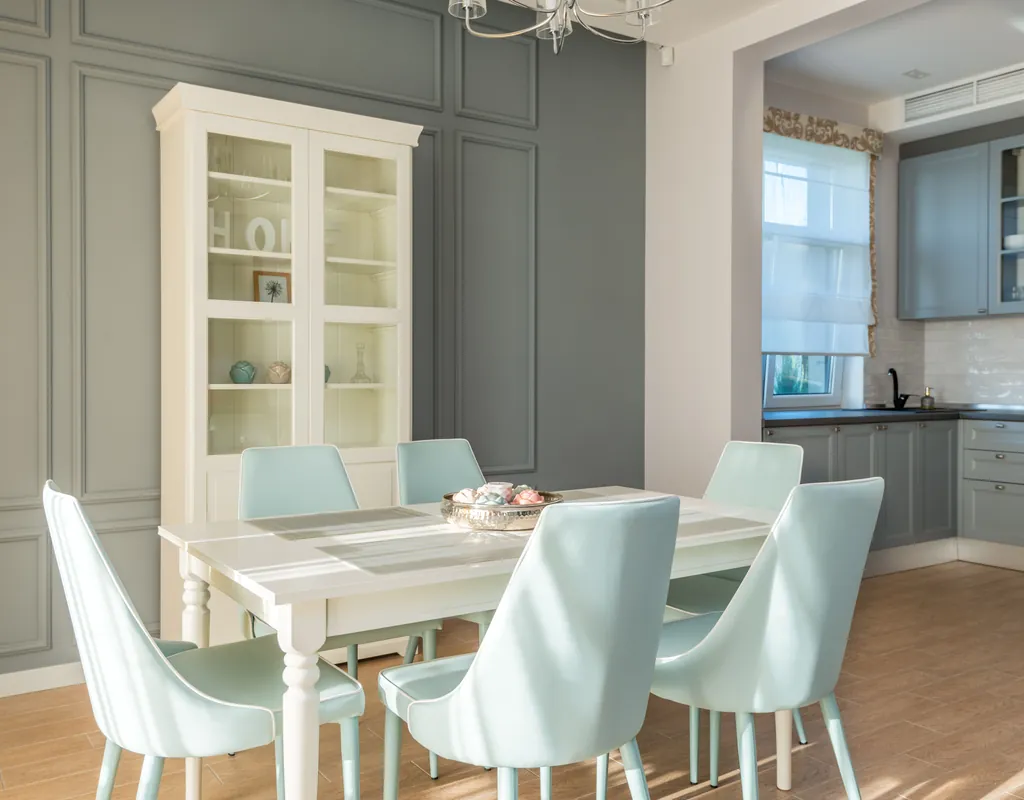
When floor space runs out, the walls usually still have something to offer.
A few floating shelves can hold serving pieces, a plant, or a couple of decorative objects without adding anything to the floor. Wall-mounted hooks or narrow rails can do the same for items that would otherwise need a cabinet.
The balance matters here. A wall covered entirely in shelves and objects can create as much visual clutter as a floor covered in furniture. Choosing a few items that are genuinely useful or meaningful and leaving some wall space intentionally empty tends to look more considered than using every available surface.
11. Try Flexible or Multi-Functional Furniture
Furniture that does more than one job earns its place in a small room in a way that single-purpose pieces don’t.
An extendable table stays compact during everyday use and expands when guests arrive, without the room having to accommodate the larger size permanently. A storage bench handles seating and keeps less frequently used items out of sight at the same time. A small dining table that can double as a desk when needed removes the need for a separate surface entirely.
For more ideas on furniture that works harder in a small home, our guide to Multi-Functional Furniture Ideas for Small Apartments covers a range of options worth considering.
12. Keep the Tabletop Clear
A dining table covered in decorative objects, papers, and items that have nowhere else to go can make a small dining room feel considerably more crowded than the room’s actual size would suggest.
One small centerpiece — a plant, a simple vase, a candle — is usually enough to add character without cluttering the surface. Everything else benefits from having a proper home elsewhere.
If the table also serves as a workspace or homework area, making a habit of clearing it back to its dining setup afterward keeps the room feeling organized rather than permanently occupied by whatever was last used on it.
Simple Dining Room Changes That Don’t Require Renovation
Before spending money on new furniture, it’s worth trying the simpler changes first.
Remove any furniture that isn’t actually being used. Rearrange the table so movement around it feels easier. Keep chairs pushed fully in when nobody’s sitting. Reduce decorative objects on the table and nearby surfaces. Open the curtains fully during the day. Add a mirror if there’s a suitable wall with nothing on it.
These changes take an hour and cost nothing, and they often make more difference than a furniture purchase would.
Common Mistakes That Make a Small Dining Room Feel Smaller
Buying an Oversized Table
A larger table provides more seating but can leave too little room for comfortable movement. Measure first.
Choosing Bulky Chairs
Wide chairs with armrests need more clearance than slimmer ones and can quickly consume the space around the table.
Filling Every Empty Corner
Empty areas aren’t wasted space. They give the room visual breathing room and make it easier to move through.
Blocking Windows
Tall furniture placed in front of a window reduces available daylight for every hour it sits there.
Using Too Many Decorations
Multiple strong patterns and accessories across the same room tend to read as clutter rather than personality.
Buying Furniture Before Measuring
Even attractive furniture becomes a poor choice if it doesn’t leave enough room to use the space properly.
Frequently Asked Questions
What color makes a small dining room look bigger?
Light neutrals — soft white, cream, pale gray, and warm beige — reflect more available light and help the room feel more open. Darker or bolder colors can still be used as accents without dominating the space.
Is a round table better for a small dining room?
It can be, particularly in a room with an irregular shape or limited clearance around the table. The best shape depends on the room’s dimensions — a long narrow room often works better with a slim rectangular table.
Should I put a rug under a dining table?
A rug can define the dining area and add warmth. Choose a size that allows chairs to remain on the rug when pulled away from the table. In a very tight room, leaving the floor uncovered is often the simpler option.
How can I add storage without making the room feel smaller?
Floating shelves, a narrow sideboard, and wall-mounted options keep more floor space available than freestanding cabinets. Choose one or two pieces rather than trying to add storage everywhere.
Does a mirror really make a dining room look bigger?
A well-positioned mirror creates the impression of additional depth and reflects light. Its effect depends on what it’s reflecting — position it to face a window or an open part of the room for the best result.
Final Thoughts
A small dining room doesn’t need a complicated makeover to feel more comfortable.
Start with furniture that fits the room and leaves enough space for people to sit and move around without squeezing. Keep the floor relatively open, make good use of natural light, and resist the urge to fill every available corner.
A well-chosen table, slimmer chairs, a mirror in the right spot, and a clear tabletop will do more for a small dining room than most new purchases.
For more practical ideas on making compact spaces work better, explore our Small-Space Solutions guides. If you are also working on storage throughout a small home, our Small Home Office section has practical guides for compact workspaces too.