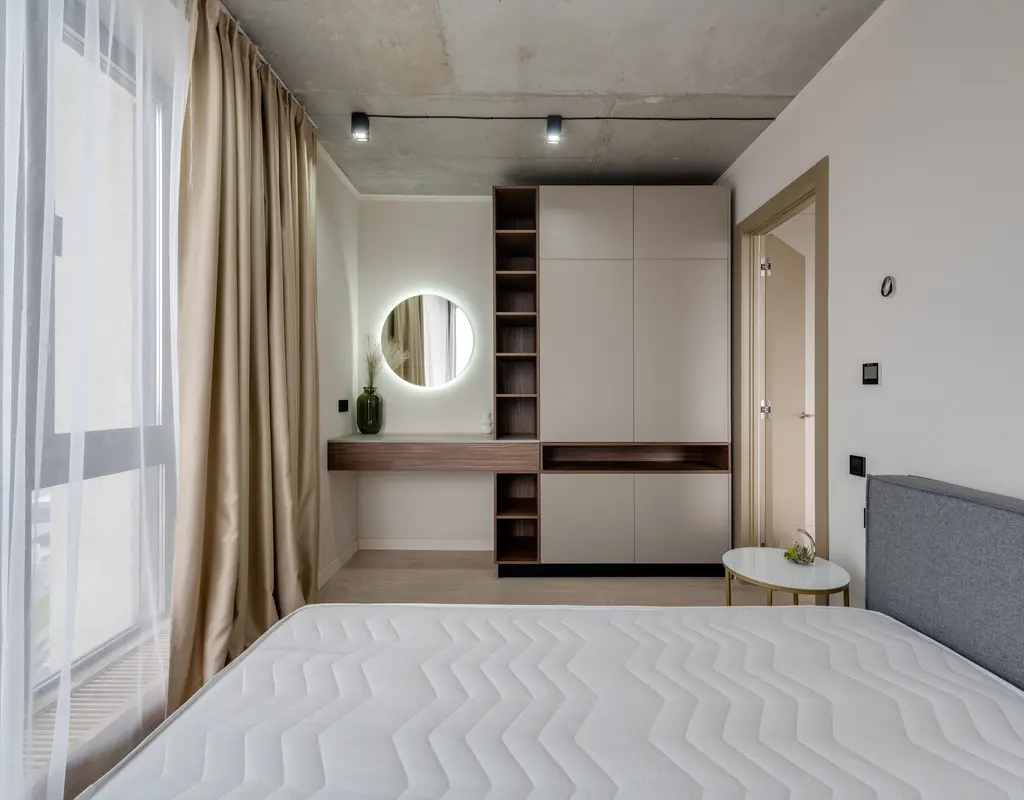
A small bedroom has one job that’s harder than it sounds: fit a bed, some storage, and enough open floor to actually move around, all in a footprint that usually wasn’t designed with much extra space in mind.
The instinct is often to solve this with more — a bigger wardrobe, extra shelving, another storage box under a chair that’s already doing too much. In practice, the opposite tends to work better. A small bedroom usually feels its best when there’s less competing for attention, not more.
Getting there doesn’t require knocking down a wall or replacing every piece of furniture in the room. Most of what actually changes how a bedroom feels comes down to a handful of decisions about size, placement, and what’s allowed to stay.
If you’re working through other tight spaces in the same home, our guide to How to Make a Small Living Room Feel Bigger covers a lot of the same thinking applied to a different room.
1. Choose the Right Bed Size for the Room
The bed is almost always the largest object in a bedroom, so its size sets the tone for everything else.
A queen-size bed can look completely reasonable in a showroom and then take up nearly the entire floor once it’s actually in a small room. Before assuming a certain bed size is non-negotiable, it’s worth measuring what’s left once it’s in place — not just around the bed itself, but the space needed to open a wardrobe door or walk to a window without turning sideways.
A full or double bed frees up noticeably more usable floor than a queen, and for a single sleeper, a well-chosen full-size mattress often gives up very little in comfort while giving back a meaningful amount of room.
Frame style matters too. A bed with a low profile and a simple headboard tends to make a room feel more open than a tall, heavily upholstered one, simply because it takes up less visual space even at the same footprint.
2. Keep Furniture Off the Floor Where Possible
Furniture that visibly touches the floor across its whole width tends to make a room feel more solid and closed-in than furniture that doesn’t.
A bed frame on slim legs, rather than a solid base, lets you see a strip of floor underneath — and that small gap does more for the sense of space than its size would suggest. The same applies to nightstands and dressers with visible legs instead of flush panels running to the ground.
Wall-mounted or floating nightstands take this a step further. They free up the floor entirely in a spot that would otherwise hold two solid pieces of furniture, one on each side of the bed.
None of this requires replacing every piece in the room at once. Swapping just the bed frame, or adding a floating shelf in place of one nightstand, can shift how open the room feels without a full furniture overhaul.
3. Use Light, Soft Colors on the Walls
Wall color affects how much of the available light actually bounces back into the room, which has a direct effect on how spacious a small bedroom feels.
Soft whites, pale grays, and warm neutrals reflect more light than deep or saturated colors do, and that reflected light is part of what makes a room read as open rather than boxed in.
This doesn’t mean the room needs to be entirely one shade. A single accent wall in a slightly deeper tone, or color introduced through bedding, curtains, or a rug, adds personality without working against the sense of space the wall color is doing.
A ceiling painted the same color as the walls, or a shade lighter, can also help — it removes the visual line where wall meets ceiling and can make a low ceiling feel a little higher than it is.
4. Make the Most of Natural Light
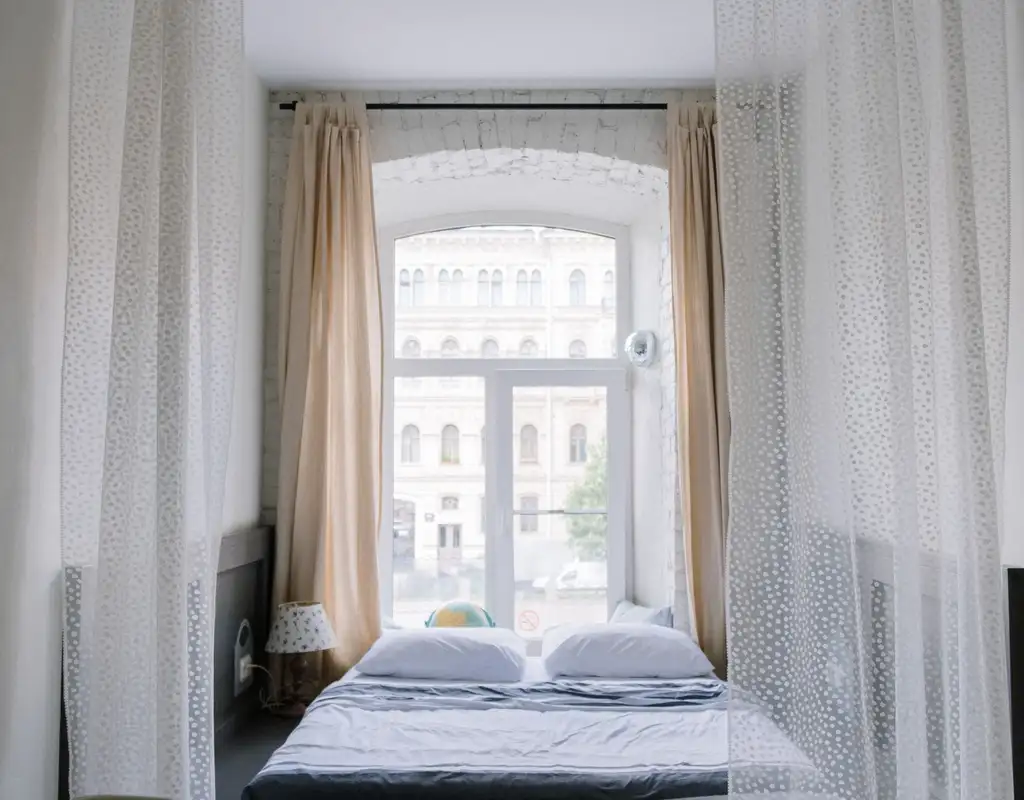
A bedroom that gets good natural light during the day almost always feels larger than the same room lit only by lamps.
Heavy curtains or blinds that stay half-closed out of habit block more daylight than most people realize. Swapping to lighter fabric, or simply opening blinds fully during the day, can noticeably change how bright and open the room feels without spending anything.
Furniture placed directly in front of a window cuts down on available light for as long as it sits there. Where possible, positioning the bed or a dresser to the side of a window rather than blocking it keeps the light doing its job.
If privacy is a concern, sheer curtains offer a middle ground — enough coverage to feel comfortable, without cutting off most of the daylight the way heavier curtains do.
5. Add a Mirror to Reflect Light and Space
A well-placed mirror is one of the more effective low-cost changes available in a small bedroom.
Positioned to reflect a window or an open stretch of the room, a mirror can visually double the sense of space and light without adding a single new object to the floor. A mirror facing a cluttered corner or a blank wall does far less — where it’s placed matters as much as the fact that it’s there.
A full-length mirror leaning against a wall or mounted on the back of a door serves a practical purpose too, without needing its own dedicated spot the way a large wardrobe mirror might.
One mirror, well positioned, generally does more for a small bedroom than several smaller ones scattered around the room.
6. Choose Multi-Functional Furniture
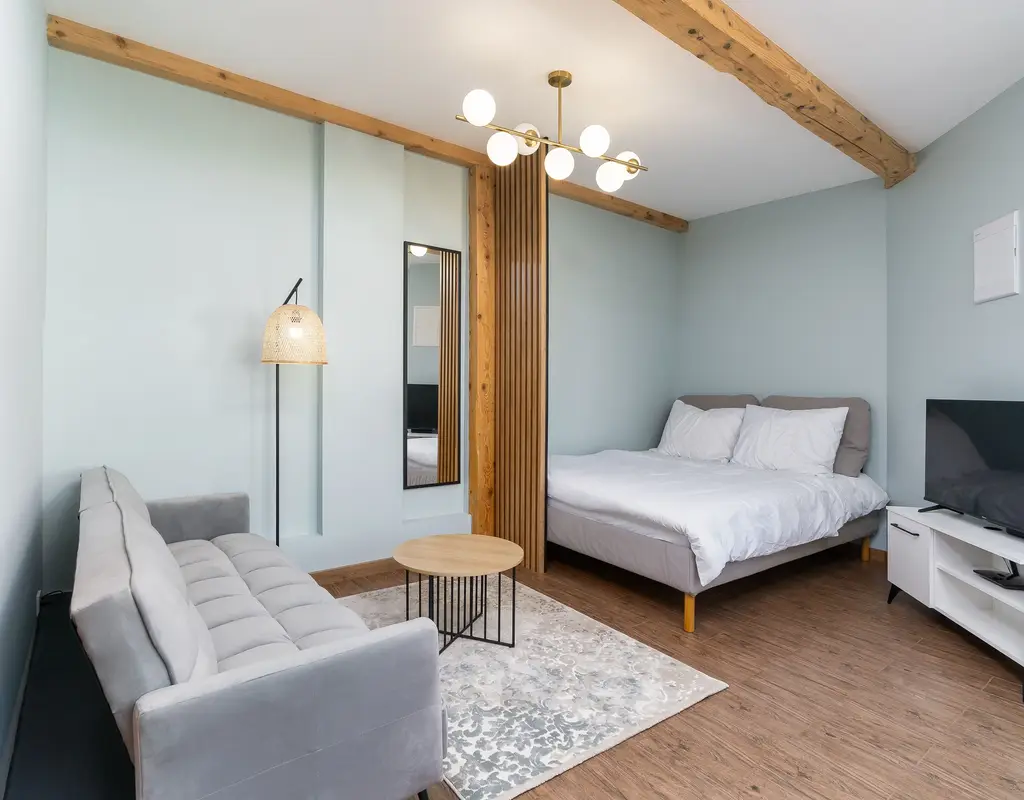
In a small bedroom, furniture that does only one job is a harder sell than furniture that does two or three.
A bed with drawers built into the base handles storage that would otherwise need a separate dresser. An ottoman at the foot of the bed can double as seating and a place to store extra bedding. A slim desk that also works as a vanity saves the room from needing both.
Before adding a new piece of furniture, it’s worth asking whether something already in the room could take on that function instead. Often, one well-chosen multi-purpose piece replaces two single-purpose ones while taking up noticeably less combined space. For a broader look at this approach, our guide to Multi-Functional Furniture Ideas for Small Apartments covers options that work well beyond the bedroom too.
7. Use Under-Bed Storage
The space underneath a bed is often the single largest unused area in a small bedroom.
Storage boxes, drawers on casters, or a bed frame with built-in drawers can hold out-of-season clothing, spare bedding, or anything else that doesn’t need to be reached daily. Because it sits below eye level, this storage adds capacity without adding to what the room visually has to deal with.
A bed frame raised slightly higher than standard gives even more usable clearance underneath — worth checking before ruling out under-bed storage as an option.
The one thing to watch is turning this space into a catch-all for things that don’t actually belong in the bedroom. Under-bed storage works best when it’s organized rather than treated as overflow.
8. Keep the Floor Visible
The more floor that’s visible in a small bedroom, the more open the room tends to feel, even when the total floor area hasn’t changed at all.
This isn’t an argument against rugs — a rug sized appropriately to the room can anchor the space well. It’s more about being deliberate with how much floor each piece of furniture covers, and whether a smaller footprint could do the same job.
A slim desk instead of a bulky one, a narrow bench instead of a full bench seat, furniture with legs instead of a solid base — these choices add up in a room where every square foot of visible floor matters.
9. Use Vertical Space for Storage
When floor space runs out, the walls above it usually haven’t been asked to do much yet.
Tall, narrow shelving units hold a surprising amount without extending far into the room. Wall-mounted shelves above a desk or dresser add storage that a comparable floor-standing unit couldn’t offer in the same footprint.
Going vertical also draws the eye upward, which tends to make a room feel taller than it actually is — a small but genuine side benefit alongside the added storage.
The caution here is the same as anywhere else: a wall packed edge to edge with shelves and objects can start to feel as cluttered as an overloaded floor. Leaving some wall space genuinely empty keeps vertical storage from working against the room instead of for it.
10. Keep Bedding and Textiles Simple
A bed piled with decorative pillows, layered throws, and a heavily patterned duvet can visually shrink a small room, even when it’s objectively a well-made bed.
A simpler bedding setup — a duvet in a solid or subtly textured color, two or three pillows rather than six — takes up less visual space and gives the eye somewhere to rest. This doesn’t mean the bed needs to look sparse or impersonal; it means being selective rather than layering everything available onto it.
The same logic applies to curtains and rugs. One or two strong patterns in the room read as intentional. Several competing patterns across bedding, curtains, and a rug tend to read as clutter, regardless of how nice each individual piece is.
11. Use Lighting at Different Levels
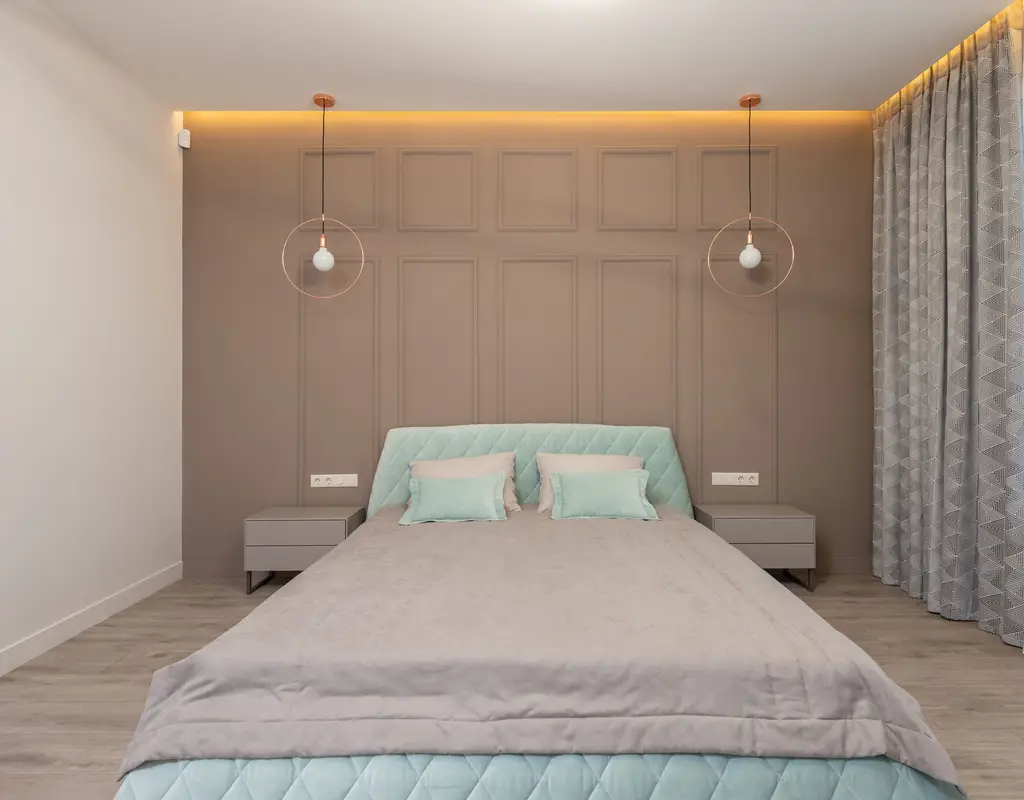
A single overhead light rarely does a small bedroom any favors. It lights the room evenly but flatly, and can leave corners feeling dim by comparison.
A bedside lamp, a floor lamp in a reading corner, or a wall-mounted light near a mirror adds warmth and depth that a single ceiling fixture can’t provide on its own. Layering a few different light sources also means the room can be lit differently depending on the time of day or what it’s being used for.
Dimmable lighting is particularly useful in a bedroom specifically — brighter for getting ready in the morning, softer in the evening, without needing to switch fixtures to get there.
12. Keep Surfaces Clear
A nightstand crowded with books, chargers, a lamp, and whatever ended up there over the past week can make a small bedroom feel more cluttered than the room’s actual size would suggest.
A few chosen items on display are fine — a lamp, a small plant, a book currently being read. The rest benefits from having somewhere else to go: a drawer, a small tray, a basket under the bed. Surfaces that stay mostly clear read as calmer, and in a small room, that sense of calm does real work.
This applies to the top of a dresser and any desk in the room just as much as it applies to the nightstand.
13. Leave Some Breathing Room
It’s tempting to fill every corner of a small bedroom, on the theory that unused space is wasted space.
A small amount of genuinely empty space — a bare corner, a stretch of wall without a shelf, floor beside the bed that isn’t holding anything — gives the eye somewhere to land that isn’t full of objects. Without it, a room can end up feeling busier than its size alone would explain.
Not every corner needs a plant, a lamp, or a small table simply because there’s room for one.
How to Arrange Furniture in a Small Bedroom
Start with the bed, since it’s the largest piece and everything else tends to arrange around it. Position it where it doesn’t block a window or sit directly in the path between the door and the rest of the room.
Add storage furniture next, prioritizing pieces that can sit against a wall without interrupting the main walking path. A dresser or wardrobe usually works best along the wall with the least natural light, keeping brighter walls free for the bed or a desk.
Live with the initial layout for a few days before making it permanent. Walk the path you actually use to get in and out of bed, open the wardrobe, and reach the window. Small adjustments — moving a nightstand a few inches, angling the bed slightly — often solve problems that aren’t obvious until the room is actually being used.
What Furniture Works Best in a Small Bedroom
Some choices consistently make more sense in a compact bedroom than others:
A bed frame with under-bed storage or slim legs rather than a solid base
A dresser or wardrobe with a shallow depth, rather than one built for a larger room
Floating nightstands or a slim console instead of two full-size nightstands
A mirror that also serves a practical purpose, such as a full-length door mirror
Wall-mounted shelving instead of a freestanding bookcase
A desk or vanity that folds down or tucks against a wall when not in use
As with any small space, measuring before buying matters more than it might for a larger room. A piece that technically fits can still dominate the space if it leaves no room to move around it.
How to Make a Small Bedroom Look Bigger Without Buying Anything
Start by removing anything that’s ended up in the bedroom without a clear reason to be there — items that migrated in from other rooms, clothing that doesn’t fit anymore, boxes that have been “temporarily” on the floor for months.
Rearrange what’s left so the path between the door, the bed, and the wardrobe stays clear. Open the curtains fully during the day and check whether any furniture is blocking a window.
Clear the nightstand and dresser down to a handful of items each. Straighten the bedding and reduce the number of decorative pillows if there are more than a few.
Small as these changes sound individually, they tend to add up to a noticeably different feeling room by the time all of them are done.
Common Mistakes That Make a Small Bedroom Feel Smaller
Choosing a Bed That’s Too Large for the Room
A bed sized for a larger room can leave almost no usable floor space in a small one. Measure what’s left around the bed before committing to a size.
Blocking the Window With Furniture
Furniture placed in front of a window reduces natural light for the entire time it sits there. Where possible, keep windows clear.
Overloading the Nightstands
A nightstand covered in objects makes the whole room feel busier, even if nothing else has changed. Keep it to a few items.
Using Heavy, Dark Bedding
Dark, heavily patterned, or bulky bedding can visually shrink a bed and, by extension, the room around it. A simpler setup tends to feel more spacious.
Pushing Every Piece of Furniture Against the Walls
This is a common instinct, but floating a piece slightly away from the wall sometimes creates a more natural flow than lining everything up against the perimeter.
Skipping a Mirror
A room without a mirror misses one of the easiest ways to add a sense of depth and extra light at very little cost.
A Simple Small Bedroom Refresh
Not every improvement requires new furniture or a repaint.
Start by clearing surfaces and removing anything that doesn’t need to be in the room. Rearrange existing furniture to open up the path through the room, and check whether anything is blocking the window.
Add a mirror if there isn’t one already, positioned to reflect light or an open part of the room. Simplify the bedding if it’s grown busier than it needs to be over time.
These smaller changes, done together, often make more difference than a single larger purchase would on its own.
Frequently Asked Questions
How can I make my small bedroom feel bigger?
Choose a bed sized appropriately for the room, keep furniture off the floor where possible, use light wall colors, maximize natural light, and add a well-positioned mirror. Keeping surfaces and bedding simple also helps.
What is the best bed size for a small bedroom?
A full or double bed generally leaves more usable floor space than a queen, without a significant loss of comfort for a single sleeper. The right size ultimately depends on the room’s exact dimensions.
Does a mirror really make a small bedroom look bigger?
A mirror placed to reflect a window or open space can add a genuine sense of depth and light. Its effectiveness depends heavily on where it’s positioned.
Should I skip a rug in a small bedroom?
Not necessarily. A rug sized appropriately for the room can work well. The goal is balance — enough floor stays visible that the room doesn’t feel covered edge to edge.
What furniture should I avoid in a small bedroom?
Oversized beds, solid-base furniture that blocks the floor from view, and bulky nightstands tend to work against a small room. Slimmer, multi-functional pieces generally perform better.
How do I add storage to a small bedroom without making it feel cluttered?
Prioritize under-bed storage and vertical wall storage over floor-standing furniture. Keep visible surfaces clear even if storage elsewhere in the room is doing more work.
Final Thoughts
A small bedroom tends to feel its best when it’s asked to do a few things well rather than everything at once: a comfortable bed, enough storage for what’s actually used, and enough open floor and light to make the room feel calm rather than crowded.
Furniture size, wall color, and lighting do more of this work than most new purchases. A well-placed mirror, a lighter color palette, and a bed sized for the room itself often outperform an expensive redesign.
Once those basics are in place, smaller additions — better lighting, simplified bedding, a bit of vertical storage — can refine the room further without undoing the sense of space that got it there in the first place.
For more practical ideas on compact spaces, explore our Small-Space Solutions guides.